Unclaimed Benefits US: A 5-Step Guide to Recover Forgotten Government Aid
Anúncios
Unclaimed Government Benefits US: A 5-Step Guide to Recover Over $1 Billion in Forgotten Aid
It’s a staggering figure: billions of dollars in unclaimed government benefits are waiting to be claimed by American citizens. From forgotten tax refunds and pension benefits to old insurance policies and security deposits, this money belongs to individuals and families who, for various reasons, have lost track of it. The sheer volume of these forgotten funds is astonishing, and the process of recovering them can seem daunting. However, with the right information and a structured approach, you too can navigate the labyrinth of state and federal databases to reclaim what’s rightfully yours.
This comprehensive guide is designed to empower you with a clear, 5-step process to uncover and retrieve your unclaimed government benefits. We’ll demystify the search, provide actionable steps, and highlight key resources to ensure your journey to financial recovery is as smooth and successful as possible. Don’t let your hard-earned money languish in government coffers any longer – let’s embark on this recovery mission together.
Understanding the Landscape of Unclaimed Government Benefits
Before diving into the recovery steps, it’s crucial to understand what exactly constitutes unclaimed government benefits. This isn’t just loose change; we’re talking about substantial amounts of money that can significantly impact your financial well-being. These funds can originate from a multitude of sources, both at the federal and state levels. Knowing where to look and what types of benefits exist is the first step towards a successful recovery.
Anúncios
What Exactly Are Unclaimed Benefits?
Unclaimed benefits are essentially financial assets or payments that are due to an individual or entity but have not been collected or claimed within a specific period. This often happens because the rightful owner has moved, forgotten about the asset, or passed away without heirs knowing about the funds. Government agencies, financial institutions, and businesses are legally required to turn over these dormant assets to state or federal treasuries if they remain unclaimed for an extended time.
Common Sources of Unclaimed Government Benefits
- Unclaimed Tax Refunds: Every year, millions of dollars in federal and state tax refunds go unclaimed because taxpayers move without updating their address with the IRS or state tax departments, or simply forget to cash a refund check.
- Forgotten Pension Benefits: Former employees may lose track of pension plans from old jobs, especially if the company has merged, been acquired, or ceased operations. The Pension Benefit Guaranty Corporation (PBGC) often holds these funds.
- Uncashed Payroll Checks: If you’ve left a job and didn’t pick up your final paycheck, or if a check was mailed to an old address, it could end up as unclaimed property.
- Insurance Policy Proceeds: Life insurance benefits, annuities, or property and casualty insurance payouts that were never claimed by beneficiaries.
- Bank Account Balances: Dormant checking or savings accounts, uncashed certificates of deposit (CDs), or safe deposit box contents.
- Utility Security Deposits: Deposits made to utility companies (electricity, gas, water) that were never refunded when service was terminated.
- Court-Ordered Settlements: Funds from class-action lawsuits or other legal settlements that were distributed but not claimed by all beneficiaries.
- Veterans’ Benefits: Various forms of benefits for veterans and their families that might not have been fully utilized or claimed.
- Social Security Administration (SSA) Funds: In some cases, certain Social Security payments may go unclaimed.
- Deceased Persons’ Estates: Funds belonging to deceased individuals that were never claimed by their heirs.
Understanding this diverse range of sources is key to a thorough search. Many people assume they don’t have unclaimed government benefits, but a quick check often reveals pleasant surprises.
Step 1: Check State Unclaimed Property Databases First
The vast majority of unclaimed government benefits and private forgotten funds are held at the state level. Each state has an unclaimed property program, often managed by the state treasurer or comptroller’s office. This is your primary starting point and arguably the most crucial step in your search.
Why Start with State Databases?
State unclaimed property offices act as custodians for a wide array of forgotten assets. When banks, insurance companies, utility providers, or employers can’t locate the rightful owner of an asset after a specified dormancy period (which varies by state and asset type), they are legally required to turn these assets over to the state. This includes everything from uncashed paychecks and dormant bank accounts to security deposits and insurance policy proceeds. Because states handle such a broad spectrum of funds, starting here maximizes your chances of a quick hit.
How to Search State Databases
- Visit MissingMoney.com or Unclaimed.org: These are two excellent national databases that aggregate links to individual state unclaimed property websites. MissingMoney.com is a free, secure site endorsed by the National Association of Unclaimed Property Administrators (NAUPA). It allows you to search multiple states at once with a single query. Unclaimed.org is NAUPA’s official website and provides direct links to each state’s official unclaimed property search portal.
- Search by Name: When using these sites, enter your full name (and any previous names, like a maiden name) to begin your search. Be thorough.
- Search for Family Members: Don’t just search for yourself. Also, search for immediate family members, living or deceased. Many unclaimed government benefits might be due to a parent, grandparent, or spouse.
- Consider All Past States of Residence: If you’ve lived in multiple states, or if family members have, it’s essential to check each state individually. Funds are typically held by the state where the property originated, not necessarily your current residence.
- Review the Results: If a match is found, the website will provide instructions on how to file a claim. This usually involves submitting a claim form, along with proof of identity and ownership (e.g., driver’s license, Social Security card, death certificate for deceased relatives).
Tips for a Successful State Search
- Be Patient and Persistent: The search might require checking several states and using different variations of names.
- Gather Documentation: Have readily available documents that prove your identity, address history, and connection to the original owner if claiming on behalf of someone else.
- Beware of Scams: Legitimate state unclaimed property programs will never charge you a fee to search or claim your money. If someone asks for an upfront payment, it’s likely a scam.
Completing this first step thoroughly can often resolve your search for unclaimed government benefits, as a significant portion of these funds resides at the state level.
Anúncios
Step 2: Explore Federal Unclaimed Property and Benefit Databases
While states hold the bulk of unclaimed government benefits, several federal agencies also maintain databases for specific types of forgotten funds. These federal sources are critical to check, especially if your initial state-level searches didn’t yield results or if you suspect you might be owed money from federal programs or specific industries.
Key Federal Agencies to Check for Unclaimed Benefits
- Internal Revenue Service (IRS) – Unclaimed Tax Refunds:
- What to look for: Uncashed federal income tax refund checks. If you didn’t receive a refund you were expecting, or if a check was sent to an old address, the IRS might still owe you money.
- How to search: You can check the status of your federal tax refund using the IRS’s ‘Where’s My Refund?’ tool on their official website. You’ll need your Social Security number, filing status, and the exact refund amount shown on your return. Note that there’s generally a three-year limit to claim a refund from the original due date of the tax return.
- Pension Benefit Guaranty Corporation (PBGC) – Unclaimed Pensions:
- What to look for: Forgotten pension benefits from private-sector defined benefit plans. If you worked for a company that went out of business or terminated its pension plan, the PBGC might be holding your benefits.
- How to search: Visit the PBGC’s ‘Search for Unclaimed Pensions’ database on their official website. You can search by employer name, employee name, or partial Social Security number.
- Social Security Administration (SSA) – Unclaimed Social Security Benefits:
- What to look for: While less common for direct ‘unclaimed’ funds in the traditional sense, people sometimes fail to claim survivor benefits, spousal benefits, or disability benefits they are eligible for. Also, if a beneficiary dies, and there’s an uncashed check, it might be held.
- How to search: It’s best to contact the Social Security Administration directly by phone or by visiting a local office. You can also create a ‘my Social Security’ account online to review your earnings history and benefit estimates.
- U.S. Department of Veterans Affairs (VA) – Unclaimed Veterans Benefits:
- What to look for: Various benefits for veterans and their families, including disability compensation, pension, education, health care, and burial benefits, that may not have been fully utilized or claimed.
- How to search: Veterans and their families should contact the VA directly through their official website, eBenefits portal, or by calling their toll-free numbers. Local veteran service organizations can also assist with navigating VA benefits.
- Federal Housing Administration (FHA) – Mortgage Insurance Refunds:
- What to look for: Refunds for FHA mortgage insurance premiums if you paid off your FHA loan early or refinanced.
- How to search: Use the FHA’s ‘Refunds for Homeowners’ search tool on the HUD website. You’ll need your FHA case number and Social Security number.
- U.S. Treasury – Unclaimed Savings Bonds:
- What to look for: Matured savings bonds that were never cashed.
- How to search: The TreasuryDirect website has a tool to help you search for matured, unredeemed savings bonds. You’ll need the owner’s Social Security number or Employer Identification Number.
Tips for Federal Searches
- Be Specific: Federal agencies often specialize in particular types of benefits. Knowing which category your potential claim falls into will help direct your search.
- Gather All Relevant Information: Have Social Security numbers, dates of birth, previous addresses, and any employment or service records handy.
- Official Websites Only: Always use the official websites of these federal agencies to avoid scams. Look for ‘.gov’ domains.
By systematically checking these federal resources, you significantly broaden your net for unclaimed government benefits, ensuring no stone is left unturned.
Step 3: Investigate Other Specialized Databases and Resources
Beyond state treasuries and major federal agencies, there are several niche databases and resources that might hold unclaimed government benefits or related funds. These often pertain to specific industries, types of accounts, or legal situations. A thorough search requires exploring these less obvious avenues.
Additional Avenues for Unclaimed Funds
- National Association of Insurance Commissioners (NAIC) – Life Insurance Policy Locator:
- What to look for: Unclaimed life insurance policy benefits. If you suspect a deceased relative had a life insurance policy but you can’t find it, this tool can help.
- How to search: The NAIC’s Life Insurance Policy Locator Service allows consumers to submit a request, and participating insurance companies will search their records for a match.
- FDIC and NCUA – Unclaimed Bank Funds (Failed Institutions):
- What to look for: Funds from accounts in failed banks (FDIC-insured) or credit unions (NCUA-insured) that were not claimed. While the FDIC and NCUA typically ensure depositors get their money, sometimes funds remain uncollected.
- How to search: Check the FDIC’s Unclaimed Deposits Search and the NCUA’s Liquidating Credit Unions page.
- Court Systems – Unclaimed Court Funds:
- What to look for: Funds held by courts from various legal proceedings, such as class-action lawsuit settlements, bankruptcy dividends, or unclaimed bail money.
- How to search: This requires more localized searching. Check the websites of federal district courts, state court systems, and even local county courts. Many have online portals for searching unclaimed funds or specific court dockets.
- Department of Labor – Employee Benefits Security Administration (EBSA):
- What to look for: Information and assistance regarding private-sector employee benefit plans, including pensions, health, and other benefits. While not a direct search tool for unclaimed funds, EBSA can help you understand your rights and locate plan administrators.
- How to search: Visit the EBSA website or contact their helpline for assistance.
- Housing and Urban Development (HUD) – Unclaimed Funds from Foreclosures:
- What to look for: If your home was foreclosed on with an FHA-insured mortgage, and the sale generated surplus funds, you might be entitled to a refund.
- How to search: This is often managed at the state or local level through the foreclosure process, but HUD provides general information. It’s often linked to the FHA mortgage insurance refund search.
Advanced Search Strategies
- Use Previous Names and Addresses: Always search using maiden names, previous married names, and any addresses you or your family members have lived at.
- Search for Deceased Relatives: Many unclaimed government benefits belong to deceased individuals. Having their death certificate and other personal information ready will be crucial for claims.
- Check for Children’s Accounts: Sometimes, accounts or savings bonds were set up for children and then forgotten.
By diligently checking these specialized databases, you increase your chances of finding hidden unclaimed government benefits that might not appear in broader searches.
Step 4: Understand the Claim Process and Required Documentation
Once you’ve identified potential unclaimed government benefits, the next critical step is to understand and navigate the claim process. This often involves submitting specific documentation to prove your identity and your right to the funds. Being prepared with the correct paperwork can significantly expedite your claim.
General Steps for Filing a Claim
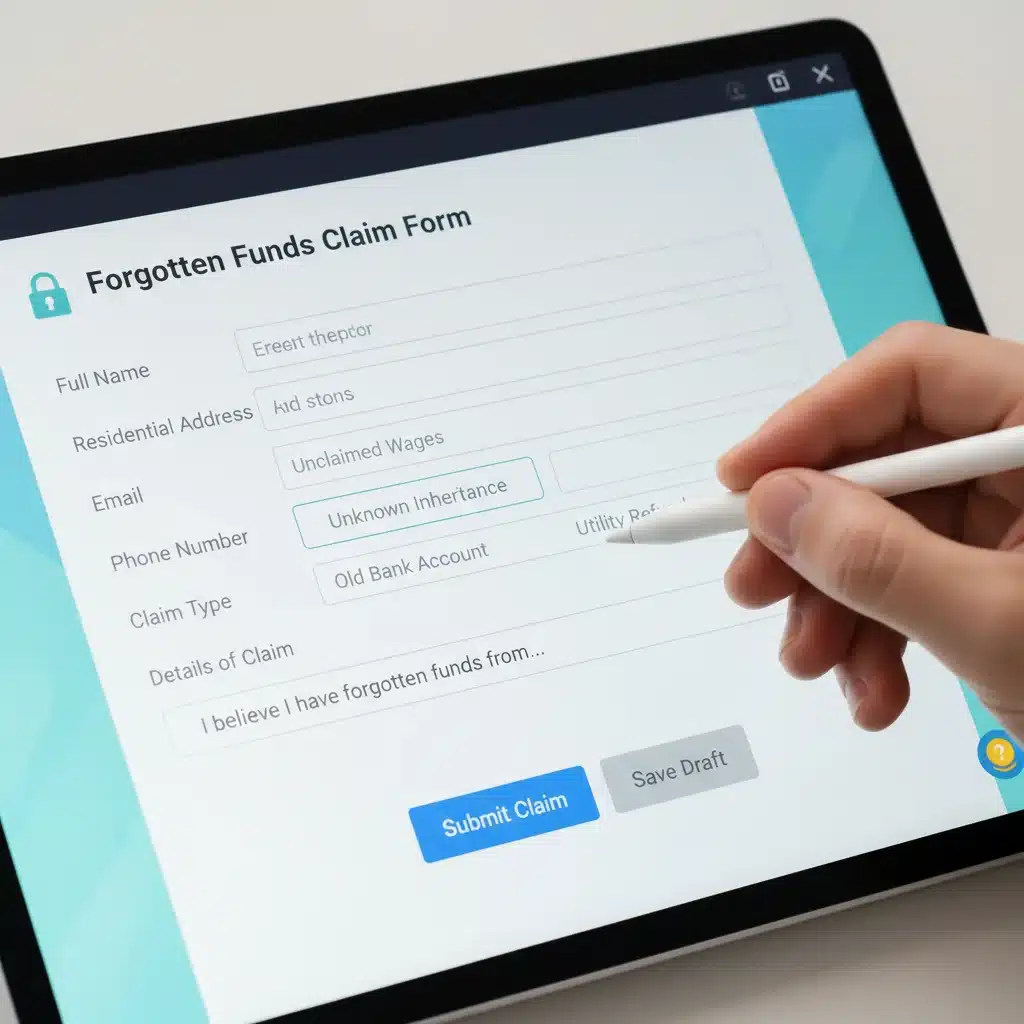
- Locate the Claim Form: Most unclaimed property websites or federal agency portals will provide a printable claim form or an online submission option.
- Read Instructions Carefully: Each agency or state will have specific requirements. Pay close attention to what documents are needed and how they should be submitted (e.g., original documents, certified copies, notarized signatures).
- Gather Required Documentation: This is the most crucial part. Common documents include:
- Proof of Identity: Government-issued photo ID (driver’s license, passport).
- Proof of Social Security Number: Social Security card or official document displaying your SSN.
- Proof of Address: Utility bill, bank statement, or other official mail showing your current address.
- Proof of Prior Address: If the unclaimed property is linked to an old address, you might need documents proving you resided there (e.g., old utility bills, lease agreements, tax returns).
- Proof of Relationship (if claiming for someone else): Birth certificate, marriage certificate, death certificate, will, letters of administration, power of attorney. This is especially important for deceased individuals’ estates.
- Proof of Ownership (specific to the asset): Old bank statements, insurance policy numbers, stock certificates, paycheck stubs, or any correspondence related to the original asset.
- Notarization (if required): Some claims, especially for larger amounts or complex estates, may require your signature to be notarized.
- Submit the Claim: Follow the instructions for submission, whether by mail, online, or in person. Keep copies of everything you submit for your records.
- Follow Up: Claims can take time to process. Note down any reference numbers and follow up periodically if you don’t hear back within the stated timeframe.
Special Considerations for Deceased Loved Ones
Claiming unclaimed government benefits on behalf of a deceased family member often involves additional steps and documentation:
- Death Certificate: A certified copy is almost always required.
- Proof of Relationship: Birth certificates, marriage certificates, or adoption papers to establish your kinship.
- Proof of Authority: If there is a will, you may need to provide a copy and proof that you are the executor. If there’s no will, you might need Letters of Administration or an Affidavit of Heirship from the probate court to prove you are the rightful heir or personal representative.
- Small Estate Affidavits: For smaller amounts, some states allow claims using a small estate affidavit, which can bypass a full probate process.
Anticipate Potential Challenges
- Missing Documentation: It can be challenging to find old records. Contacting previous employers, banks, or the IRS for transcripts might be necessary.
- Processing Time: Government agencies can have backlogs, so patience is key.
- Identity Verification: Agencies are strict about verifying identity to prevent fraud. Be prepared for thorough checks.
By meticulously preparing your documentation and understanding the procedural requirements, you can significantly streamline the process of recovering your unclaimed government benefits.
Step 5: Stay Vigilant and Prevent Future Unclaimed Funds
Successfully recovering your unclaimed government benefits is a significant achievement. However, the final step is to implement strategies to prevent future funds from becoming lost or forgotten. A proactive approach to managing your financial affairs can save you time and effort down the line.
Best Practices to Keep Your Funds Claimed
- Keep Records Organized: Maintain a centralized, secure system for all your financial documents. This includes bank statements, insurance policies, pension plan information, investment accounts, and tax returns. Digital copies backed up to a cloud service, alongside physical files, are ideal.
- Update Your Address Regularly: Whenever you move, inform all financial institutions, employers (for pension plans), utility companies, and government agencies (IRS, Social Security Administration, state tax departments) of your new address.
- Cash Checks Promptly: Make it a habit to deposit or cash all checks as soon as you receive them. Uncashed checks are a primary source of unclaimed property.
- Review Statements Annually: Periodically review all your financial statements, including bank accounts, investment portfolios, and retirement plans. Look for any dormant accounts or unexpected changes.
- Inform Beneficiaries: Ensure your loved ones know about all your assets, insurance policies, and pension plans. Provide them with access to necessary documents or instructions on where to find them in case of your incapacitation or death. This is crucial for ensuring your unclaimed government benefits don’t become someone else’s search.
- Create a Financial Inventory: Maintain a list of all your financial accounts, including account numbers, contact information for institutions, and beneficiaries. Update this list annually.
- Use Direct Deposit: Opt for direct deposit for paychecks, tax refunds, and government benefits whenever possible. This reduces the risk of lost or uncashed checks.
- Monitor Credit Reports: Regularly checking your credit report can sometimes flag dormant accounts or old debts that might indirectly lead to forgotten funds.

The Importance of Vigilance
The financial landscape is constantly evolving, and so are the ways funds can become separated from their owners. By staying informed and adopting these preventative measures, you significantly reduce the likelihood of your money becoming part of the billions in unclaimed government benefits each year. This proactive approach not only secures your financial future but also provides peace of mind for you and your family.
Conclusion: Reclaim Your Unclaimed Government Benefits Today
The journey to recover unclaimed government benefits might seem complex, but by following this 5-step guide, you are well-equipped to navigate the process effectively. From checking state unclaimed property databases to exploring federal resources and understanding the claim documentation, each step brings you closer to reclaiming what’s rightfully yours. Remember, billions of dollars are waiting to be returned to their rightful owners, and a portion of that could very well be yours.
Don’t let procrastination cost you. Take the initiative today to search for any forgotten funds or benefits that may be held in your name or that of a deceased family member. The peace of mind and potential financial boost that comes with recovering these assets are invaluable. Start your search now, stay organized, and ensure your money works for you, not against you in some forgotten government account. Your financial recovery begins with a single search – make it count!