Federal Stimulus Package: $500 Billion Boost Expected by Q3 2026
Anúncios
In a development that promises to reshape the economic landscape of the United States, a new federal stimulus package is reportedly on track to inject a colossal $500 billion into the nation’s economy by the third quarter of 2026. This anticipated influx of capital is designed to bolster various sectors, stimulate growth, and provide a much-needed boost to an economy navigating both persistent challenges and emerging opportunities. The implications of such a significant fiscal intervention are far-reaching, touching everything from employment rates and consumer spending to infrastructure development and technological innovation. Understanding the intricacies of this package, its intended targets, and its potential ripple effects is crucial for businesses, investors, and everyday citizens alike.
Understanding the Scope of the Federal Stimulus Package
The proposed federal stimulus package represents a substantial commitment from the government to invigorate economic activity. While the exact details are still being finalized, preliminary reports suggest a multi-pronged approach aimed at addressing key vulnerabilities and fostering long-term resilience. This isn’t merely a short-term fix; it’s envisioned as a strategic investment in the nation’s future economic health. The $500 billion figure is significant, placing this package among the larger fiscal interventions in recent history, underscoring the government’s determination to ensure robust economic recovery and sustained growth.
Anúncios
Key Pillars of the Stimulus
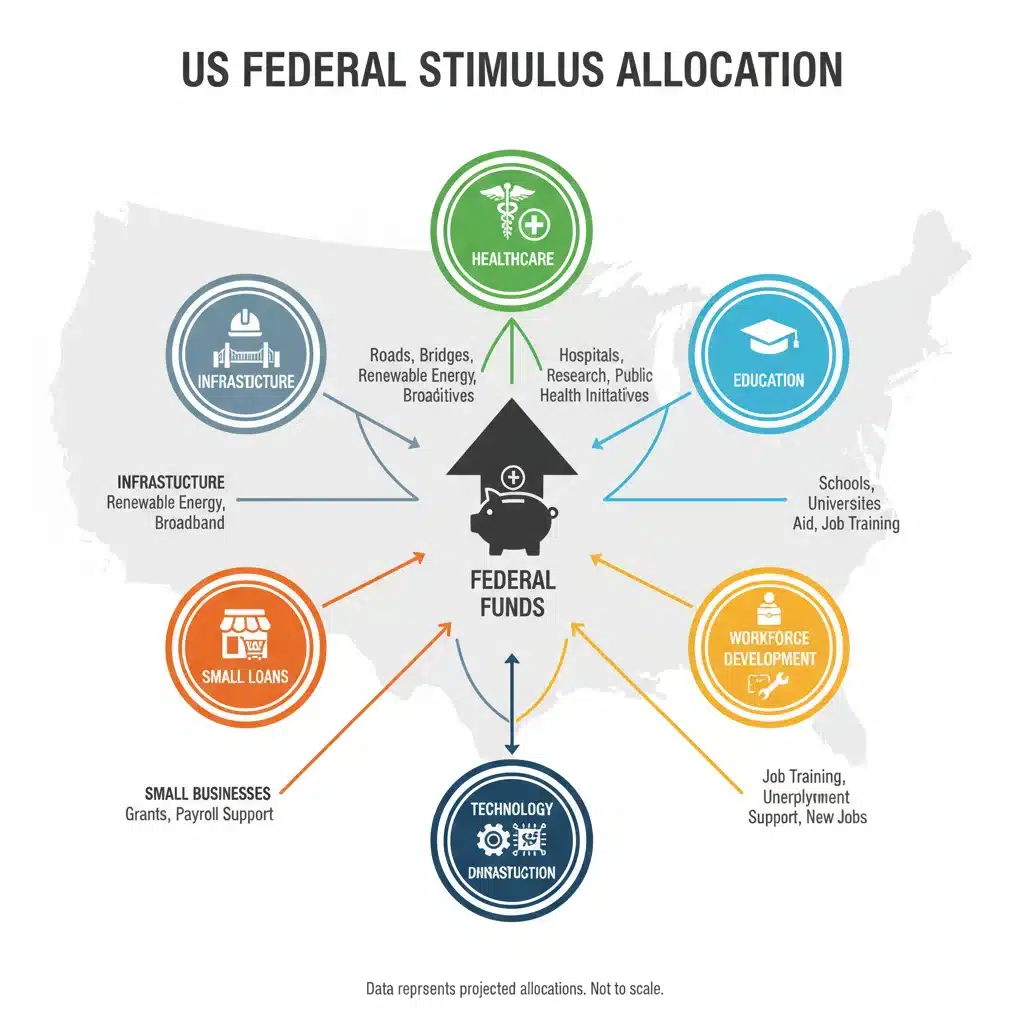
Early indications suggest that the federal stimulus package will focus on several critical areas. These pillars are designed to create a synergistic effect, where investment in one sector positively influences others. The primary objectives include:
- Infrastructure Development: A significant portion is expected to be allocated to upgrading and expanding the nation’s aging infrastructure. This includes roads, bridges, public transportation, broadband internet, and energy grids. Such investments not only create jobs but also improve logistical efficiency and competitiveness.
- Support for Small Businesses: Small and medium-sized enterprises (SMEs) are the backbone of the American economy. The package is likely to include grants, loans, and tax incentives specifically tailored to help these businesses recover, expand, and innovate, thereby preserving and creating jobs.
- Workforce Development and Education: Investing in human capital is paramount. Funds are anticipated for job training programs, vocational schools, and initiatives aimed at reskilling the workforce to meet the demands of a changing economy. This also includes support for higher education and research.
- Healthcare System Enhancements: Strengthening the healthcare infrastructure, from public health initiatives to hospital capacity and medical research, is another expected focus. This aims to improve public health outcomes and prepare for future challenges.
- Green Energy and Sustainability: Aligned with global climate goals, the package is likely to fund projects related to renewable energy development, energy efficiency, and sustainable technologies, fostering a greener economy and creating new industries.
Each of these pillars is carefully chosen to maximize economic impact and address pressing societal needs. The strategic deployment of the federal stimulus package across these diverse areas is intended to generate widespread benefits, from immediate job creation to long-term economic stability and technological advancement.
Economic Impact: A Closer Look at the $500 Billion Infusion
The injection of $500 billion into the US economy is expected to have a profound and multifaceted impact. Economists are already modeling potential scenarios, generally concluding that such a substantial federal stimulus package will significantly boost GDP, reduce unemployment, and potentially mitigate inflationary pressures in the long run by increasing supply-side capacity. However, the precise magnitude and distribution of these effects will depend on the specific mechanisms of deployment and the prevailing economic conditions at the time.
Boosting GDP and Job Creation
One of the most immediate effects of the federal stimulus package will be a direct increase in aggregate demand. Government spending on infrastructure, for instance, translates into demand for construction materials, labor, and related services, creating a multiplier effect throughout the economy. Experts predict that for every dollar spent on infrastructure, the economy could see a return of $1.50 to $3.00 in economic activity. This means the $500 billion could generate an additional $750 billion to $1.5 trillion in economic output over several years.
Job creation is another primary objective. Infrastructure projects alone are labor-intensive, requiring engineers, construction workers, project managers, and various support staff. Small business support will help retain existing jobs and foster new entrepreneurial ventures. Workforce development programs will equip individuals with the skills needed for these new opportunities, ensuring that the benefits of the federal stimulus package are broadly distributed across the labor market. Estimates suggest that hundreds of thousands, if not millions, of jobs could be created or sustained as a direct or indirect result of this investment.
Anúncios
Impact on Inflation and Supply Chains
While some critics often voice concerns about stimulus packages fueling inflation, proponents argue that this particular federal stimulus package is designed to be largely supply-side oriented. Investments in infrastructure, green energy, and workforce development are intended to increase the economy’s productive capacity, which can help to alleviate inflationary pressures in the medium to long term. By improving transportation networks, for example, supply chain bottlenecks can be reduced, leading to lower costs for businesses and consumers.
Furthermore, by targeting specific sectors like healthcare and education, the package aims to improve the efficiency and accessibility of essential services, which can have a stabilizing effect on overall price levels. The challenge will be to manage the timing and distribution of funds to avoid overheating certain sectors while ensuring maximum impact where it’s most needed. The measured rollout by Q3 2026 suggests a deliberate approach to minimize inflationary risks.
Sector-Specific Benefits and Opportunities
The targeted nature of the federal stimulus package means that certain sectors are poised to benefit more directly and significantly. This creates unique opportunities for businesses, investors, and professionals within these industries.
Infrastructure and Construction
The construction industry is arguably the most direct beneficiary. Companies involved in building and repairing roads, bridges, public transit systems, and utility infrastructure will see a surge in demand. This extends to suppliers of raw materials, heavy machinery manufacturers, and engineering firms. The long-term nature of many infrastructure projects means sustained activity and employment for several years, providing stability to a sector often subject to economic cycles.
Technology and Green Energy
With a strong emphasis on broadband expansion and green energy initiatives, the technology and renewable energy sectors are set for significant growth. Companies developing smart city solutions, electric vehicle infrastructure, solar, wind, and geothermal energy projects, and energy-efficient technologies will find ample funding opportunities. This also fuels innovation, driving research and development in cutting-edge fields and creating new high-tech jobs. The federal stimulus package is a clear signal of the government’s commitment to a sustainable and technologically advanced future.
Small Businesses and Entrepreneurship
The support for small businesses is crucial for broad-based economic recovery. This could come in the form of expanded access to capital, technical assistance, and programs to help businesses adapt to new market conditions. Entrepreneurs will find a more supportive environment for launching new ventures, particularly if their ideas align with the broader goals of the federal stimulus package, such as sustainable development or technological innovation. This decentralization of economic growth is vital for community resilience.
Healthcare and Education
Investment in healthcare infrastructure, research, and public health programs will benefit healthcare providers, pharmaceutical companies, and medical device manufacturers. Similarly, educational institutions, vocational training centers, and EdTech companies will see increased funding and demand for their services. This strengthens the nation’s human capital and improves overall societal well-being, crucial components for long-term economic prosperity.
Challenges and Considerations for the Federal Stimulus Package
While the prospect of a $500 billion federal stimulus package is largely positive, its implementation will not be without challenges. Effective execution will require careful planning, coordination, and oversight to ensure that funds are utilized efficiently and achieve their intended outcomes.
Implementation and Bureaucracy
One of the primary hurdles will be the efficient allocation and deployment of funds across various federal, state, and local agencies. Bureaucratic delays, complex regulatory frameworks, and inter-agency coordination issues could slow down the impact of the federal stimulus package. Streamlined processes and clear guidelines will be essential to ensure timely project initiation and completion.
Targeting and Equity
Ensuring that the benefits of the federal stimulus package reach all segments of society, especially underserved communities, will be critical. There is a risk that funds could disproportionately benefit certain regions or established corporations. Policies must be put in place to ensure equitable distribution, promote diversity in contracting, and support businesses and communities that have historically been marginalized.
Fiscal Responsibility and Debt
The funding of a $500 billion package naturally raises questions about national debt and fiscal responsibility. While the economic benefits are expected to outweigh the costs in the long run, careful consideration of funding mechanisms – whether through borrowing, tax adjustments, or a combination – will be necessary. Transparent reporting and accountability for how the funds are spent will be vital to maintain public trust and ensure the long-term sustainability of government finances.

Preparing for the Economic Shift: Advice for Businesses and Individuals
As the federal stimulus package takes shape and its implementation draws closer, businesses and individuals can take proactive steps to position themselves to benefit from the impending economic shift.
For Businesses: Strategize and Innovate
- Identify Opportunities: Businesses in sectors targeted by the stimulus (e.g., construction, green energy, technology, healthcare) should closely monitor announcements for specific grant programs, contracting opportunities, and investment incentives.
- Prepare for Expansion: If your business is in a growth-oriented sector, begin planning for potential expansion, including workforce needs, supply chain adjustments, and capital requirements.
- Focus on Sustainability: Given the emphasis on green initiatives, businesses that adopt sustainable practices or offer eco-friendly products and services may find themselves at a competitive advantage.
- Network and Collaborate: Forge partnerships with other businesses, local governments, and educational institutions to maximize your chances of securing contracts or participating in stimulus-funded projects.
For Individuals: Skill Up and Invest Wisely
- Upskill and Reskill: Explore job training and vocational programs, especially those in high-demand sectors like infrastructure, renewable energy, and technology. The federal stimulus package is likely to create many new jobs requiring specialized skills.
- Consider Career Changes: If your current industry is stagnant, investigate opportunities in sectors poised for growth due to the stimulus.
- Financial Planning: For those who might benefit directly or indirectly, review your financial plans. Consider potential investment opportunities in companies or funds aligned with the stimulus’s objectives.
- Stay Informed: Keep abreast of official announcements and policy changes related to the stimulus package to understand how it might directly affect your employment or community.
The Long-Term Vision: Beyond Q3 2026
The $500 billion federal stimulus package, while having a target injection date by Q3 2026, is designed with a long-term vision in mind. It’s not just about immediate economic recovery but about laying a foundation for sustained growth, enhanced competitiveness, and a more resilient economy in the decades to come. The investments in infrastructure, human capital, and green technology are intended to yield dividends far beyond the initial spending period.
Building a More Resilient Economy
By modernizing infrastructure, the US aims to reduce economic vulnerabilities and improve logistical efficiency, making the economy more resilient to future shocks. Investments in healthcare will strengthen public health defenses, while support for education and workforce development will ensure a dynamic and adaptable labor force. These foundational improvements are critical for navigating an increasingly complex global economic landscape.
Enhancing Global Competitiveness
The federal stimulus package also seeks to bolster the United States’ position as a global economic leader. By investing in cutting-edge technologies, fostering innovation, and upgrading critical infrastructure, the nation aims to enhance its productivity and competitiveness on the international stage. This includes leadership in emerging industries like artificial intelligence, biotechnology, and advanced manufacturing, all of which could see indirect benefits from a stronger overall economy.
A Legacy of Investment
Ultimately, this federal stimulus package could be viewed as a significant legacy investment, similar to historical initiatives that transformed the American economy. Its success will be measured not just by short-term economic indicators but by its lasting impact on living standards, environmental quality, and the nation’s capacity for innovation and growth. It represents a bold step towards securing a prosperous future for all Americans.
Conclusion
The impending $500 billion federal stimulus package is poised to be a pivotal moment for the US economy. With a strategic focus on infrastructure, small businesses, workforce development, healthcare, and green energy, it aims to deliver a comprehensive boost to economic activity, create jobs, and foster long-term resilience. While challenges in implementation and fiscal management will need to be carefully navigated, the potential benefits are substantial. Businesses and individuals who understand the scope and implications of this package and proactively prepare for the opportunities it presents will be best positioned to thrive in the evolving economic landscape. As the nation moves towards Q3 2026, all eyes will be on how this monumental investment translates into tangible progress and a stronger, more vibrant American economy.