Exclusive Report: White House Unveils 2026 National Infrastructure Plan, Detailing $1 Trillion in Projects
The United States stands at a pivotal moment, poised to embark on one of the most ambitious infrastructure overhauls in its modern history. The White House has officially unveiled its much-anticipated 2026 National Infrastructure Plan, a comprehensive blueprint detailing an unprecedented $1 trillion investment aimed at modernizing and expanding the nation’s foundational systems. This monumental initiative is not merely about repairing aging roads and bridges; it represents a forward-looking strategy to bolster economic competitiveness, enhance public safety, create millions of jobs, and lay the groundwork for a more sustainable and equitable future. As we delve into the intricacies of this landmark plan, it becomes clear that its scope extends far beyond traditional infrastructure, encompassing everything from high-speed internet access to resilient energy grids and advanced public transportation networks. The implications of this $1 trillion commitment will resonate across every sector of American life, redefining how communities connect, how goods are transported, and how citizens access essential services.
The Vision Behind the 2026 National Infrastructure Plan
At its core, the 2026 National Infrastructure Plan is driven by a dual imperative: addressing decades of underinvestment in critical infrastructure and preparing the nation for the challenges and opportunities of the 21st century. President [Insert Fictional President’s Name, if desired, or just ‘the President’] emphasized that this plan is a generational investment, designed to not only catch up but to leapfrog ahead, ensuring American leadership in innovation and economic resilience. The administration’s vision is holistic, recognizing that infrastructure is an interconnected web where improvements in one area can catalyze progress in many others. For instance, enhanced broadband access in rural areas can unlock new economic opportunities, improve educational outcomes, and facilitate access to telehealth services, all while being supported by a more reliable energy grid.
Anúncios
The plan’s development involved extensive consultations with state and local governments, industry leaders, labor unions, and environmental organizations. This collaborative approach aimed to create a framework that is both ambitious and achievable, reflecting the diverse needs and priorities of communities across the country. Key themes woven throughout the plan include climate resilience, equity, job creation, and technological advancement. By integrating these principles, the White House seeks to build infrastructure that is not only robust but also smart, green, and inclusive. The $1 trillion figure, while staggering, is carefully allocated to maximize impact and ensure that every dollar invested contributes to long-term national prosperity and well-being. Understanding the strategic allocation of these funds is crucial to grasping the full potential of this transformative initiative.
Key Pillars of the $1 Trillion Investment
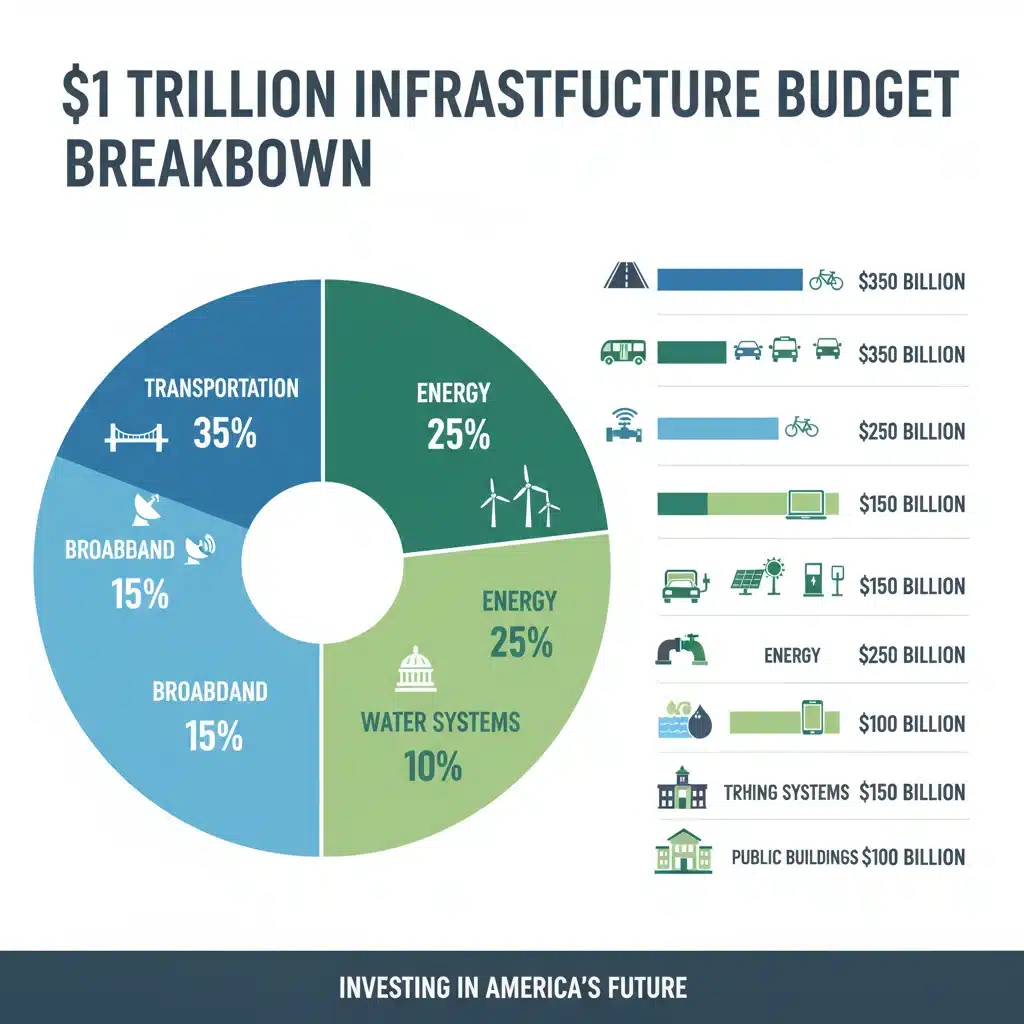
The 2026 National Infrastructure Plan is structured around several critical pillars, each receiving substantial funding to address specific national needs. These pillars represent a strategic prioritization of areas deemed most vital for America’s future:
1. Modernizing Transportation Networks ($350 Billion)
This cornerstone of the plan focuses on revitalizing America’s aging transportation infrastructure. The allocation includes:
- Roads and Bridges: A significant portion will go towards repairing and rebuilding highways, roads, and bridges that are currently in poor condition, improving safety and reducing commute times. This is a critical component of the National Infrastructure Plan, ensuring smooth transit for goods and people.
- Public Transit: Investments in expanding and upgrading public transportation systems, including bus networks, subways, and commuter rail, to offer more efficient and accessible options, especially in urban and suburban areas.
- Railways: Funding for high-speed rail projects and improvements to freight rail lines, aiming to reduce congestion on roads and enhance the efficiency of goods movement.
- Airports and Ports: Modernization of airports and seaports to improve capacity, efficiency, and resilience, facilitating international trade and travel.
The goal here is not just repair, but a fundamental upgrade that incorporates smart technologies for traffic management, sustainable materials, and resilient designs capable of withstanding extreme weather events. This comprehensive approach to transportation is designed to support economic growth and enhance the quality of life for millions of Americans, making travel safer, faster, and more environmentally friendly. The impact on supply chains and logistics alone is expected to be transformative, reducing costs and increasing reliability for businesses nationwide.
2. Expanding Broadband Internet Access ($150 Billion)
Recognizing that high-speed internet is no longer a luxury but a necessity, the plan allocates substantial funds to close the digital divide. This includes:
Anúncios
- Rural Broadband: Dedicated funding to extend fiber optic and other advanced internet infrastructure to unserved and underserved rural communities, ensuring equitable access.
- Affordability Programs: Initiatives to make broadband more affordable for low-income households, addressing both access and cost barriers.
- Digital Literacy: Programs to promote digital literacy and skills training, empowering all citizens to fully participate in the digital economy.
The expansion of broadband is a crucial element of the National Infrastructure Plan, essential for education, remote work, telehealth, and economic development in the 21st century. It aims to ensure that every American, regardless of their geographic location or socioeconomic status, has access to the digital tools necessary to thrive. This investment is projected to unlock significant economic potential in areas previously left behind, fostering innovation and creating new job opportunities in a rapidly evolving digital landscape. The societal benefits, from improved educational outcomes to enhanced access to healthcare, are expected to be profound.
3. Upgrading Water and Wastewater Systems ($100 Billion)
Ensuring access to clean and safe drinking water is a fundamental priority. This pillar will address:
- Lead Pipe Replacement: A nationwide effort to replace all lead service lines, protecting communities from harmful contaminants.
- Water Treatment Facilities: Investments in modernizing and expanding water and wastewater treatment plants to meet current and future demands, and to enhance resilience against climate change impacts.
- Stormwater Management: Funding for projects that improve stormwater infrastructure, reducing flooding and improving water quality in urban areas.
These investments are vital for public health and environmental protection, offering long-term benefits to communities across the nation. The emphasis on lead pipe replacement highlights a commitment to addressing historical environmental injustices and ensuring that all communities have access to safe drinking water. Furthermore, improving wastewater treatment and stormwater management will have significant positive impacts on local ecosystems and public recreation areas. This component of the National Infrastructure Plan underscores the administration’s dedication to foundational public services.
4. Strengthening the Energy Grid and Promoting Clean Energy ($200 Billion)
The plan makes a substantial commitment to transforming the nation’s energy infrastructure:
- Grid Modernization: Investments in upgrading the electricity grid to make it more resilient, reliable, and capable of integrating renewable energy sources. This includes smart grid technologies and advanced transmission lines.
- Renewable Energy Projects: Support for the development and deployment of solar, wind, geothermal, and other clean energy technologies.
- Electric Vehicle Infrastructure: Funding for a nationwide network of electric vehicle charging stations, accelerating the transition to clean transportation.
- Energy Efficiency: Programs to improve energy efficiency in homes, businesses, and public buildings, reducing energy consumption and carbon emissions.
This pillar is central to the administration’s climate goals and will drive significant job creation in the clean energy sector. It represents a strategic shift towards a more sustainable energy future, reducing reliance on fossil fuels and mitigating the impacts of climate change. The modernization of the energy grid is not just about integrating renewables; it’s about creating a more robust system that can withstand cyberattacks and natural disasters, ensuring consistent power supply for all Americans. This is a forward-thinking aspect of the National Infrastructure Plan, positioning the U.S. as a leader in clean energy innovation.

5. Resilient Infrastructure and Climate Adaptation ($100 Billion)
Recognizing the increasing threat of climate change, this section focuses on building infrastructure that can withstand future environmental challenges:
- Coastal Resilience: Investments in protective measures for coastal communities, including natural infrastructure solutions like wetlands restoration and artificial reefs.
- Wildfire Prevention: Funding for forest management, early warning systems, and community-level mitigation strategies in wildfire-prone regions.
- Flood Control: Upgrades to levees, dams, and other flood control systems, alongside nature-based solutions to manage water and reduce flood risks.
- Extreme Weather Preparedness: Support for state and local governments to develop and implement plans for responding to extreme weather events.
This proactive approach to climate resilience is a critical component of the National Infrastructure Plan, safeguarding communities and vital assets from the escalating impacts of climate change. By investing in resilient infrastructure, the plan aims to reduce the economic and human costs associated with natural disasters, ensuring that communities can recover more quickly and effectively. This foresight is essential for long-term national security and economic stability, reflecting a commitment to protecting both lives and livelihoods from environmental threats.
6. Public Buildings and Community Facilities ($50 Billion)
This pillar addresses the need for modern, accessible, and energy-efficient public spaces:
- Federal Buildings: Renovations and upgrades to federal buildings to improve energy efficiency, accessibility, and safety.
- Community Centers: Support for constructing and renovating community centers, libraries, and other public facilities that serve as vital hubs for local residents.
- Healthcare Facilities: Investments in modernizing public hospitals and clinics, particularly in underserved areas, to improve healthcare access and quality.
These investments will enhance the functionality and sustainability of public spaces, benefiting communities nationwide. By ensuring that public buildings are up-to-date and energy-efficient, the plan not only improves service delivery but also reduces operational costs and environmental impact. This focus on community facilities underscores the holistic nature of the National Infrastructure Plan, recognizing that infrastructure extends beyond physical networks to include the spaces where people live, work, and interact. It’s about building stronger, more connected communities.
7. Workforce Development and Innovation ($50 Billion)
A successful infrastructure plan requires a skilled workforce. This allocation focuses on:
- Job Training Programs: Funding for apprenticeships, vocational training, and community college programs to prepare workers for high-demand infrastructure jobs.
- STEM Education: Investments in science, technology, engineering, and mathematics (STEM) education to foster innovation and develop the next generation of infrastructure leaders.
- Research and Development: Support for cutting-edge research in areas like sustainable materials, smart infrastructure technologies, and advanced construction methods.
This pillar ensures that the United States has the talent and innovation necessary to build, maintain, and adapt its infrastructure for the future. By investing in workforce development, the National Infrastructure Plan aims to create a pipeline of skilled workers, ensuring that the jobs created by this initiative are filled by American citizens. This not only boosts employment but also strengthens the nation’s human capital, fostering a culture of innovation and continuous improvement in infrastructure development. It’s an investment in people as much as it is in concrete and steel.
Funding Mechanisms and Economic Impact
The $1 trillion for the 2026 National Infrastructure Plan will be financed through a combination of existing federal funds, new government bonds, and a targeted increase in corporate taxes. The administration projects that these funding mechanisms will be sufficient to cover the plan’s costs without significantly increasing the national debt relative to GDP. Furthermore, the White House has emphasized that the long-term economic benefits of this investment will far outweigh the initial costs.
Economists project that the plan will create millions of good-paying jobs over the next decade, with significant impacts across various sectors, including construction, manufacturing, technology, and engineering. The boost to economic activity is expected to generate additional tax revenues, further offsetting the plan’s expenditures. Beyond direct job creation, the improved efficiency of transportation, the widespread availability of high-speed internet, and a resilient energy grid are expected to enhance productivity, reduce business costs, and attract new investments, leading to sustained economic growth. The plan also includes provisions to ensure that small businesses and disadvantaged communities have equitable access to contracting opportunities, fostering inclusive economic development. This thoughtful approach to funding and economic impact analysis underscores the strategic nature of the National Infrastructure Plan.
Challenges and Opportunities Ahead
While the 2026 National Infrastructure Plan presents an exciting vision, its implementation will not be without challenges. Navigating complex permitting processes, managing a diverse array of projects across different jurisdictions, and ensuring efficient allocation of funds will require robust oversight and coordination. Supply chain disruptions, inflation, and labor shortages could also pose hurdles. However, the plan also presents immense opportunities. It offers a chance to integrate cutting-edge technologies like artificial intelligence for predictive maintenance, advanced materials for durability, and smart sensors for real-time monitoring, transforming how infrastructure is managed and maintained. It’s an opportunity to build back better, smarter, and more sustainably.
The emphasis on public-private partnerships will be crucial in leveraging private sector expertise and capital to complement federal investments. Encouraging innovation in construction methods and materials will also be a priority, seeking solutions that are both cost-effective and environmentally friendly. Furthermore, the plan’s focus on equity aims to ensure that the benefits of infrastructure development are shared broadly, particularly in historically underserved communities. This commitment to equitable development is a defining feature of the National Infrastructure Plan, striving to correct past imbalances and create a more just society. Overcoming these challenges while maximizing the opportunities will be key to the plan’s ultimate success.
The Long-Term Impact of the National Infrastructure Plan
The long-term impact of the 2026 National Infrastructure Plan is projected to be transformative for the United States. Beyond the immediate economic stimulus and job creation, the plan aims to create a more resilient, competitive, and equitable nation. Future generations will benefit from modernized transportation systems that reduce travel times and carbon emissions, from universal access to high-speed internet that fuels innovation and education, and from clean, reliable energy that powers homes and industries sustainably.
Improved water systems will safeguard public health, while climate-resilient infrastructure will protect communities from the increasing threats of extreme weather. The plan also seeks to re-establish America’s global leadership in infrastructure development, showcasing innovative approaches to design, construction, and maintenance. By making these critical investments now, the United States is positioning itself for sustained growth and prosperity for decades to come. This is more than just an infrastructure plan; it is a foundational investment in the future of the nation, setting a new standard for public works and societal well-being. The legacy of the National Infrastructure Plan will be a stronger, more connected, and more sustainable America.
Conclusion: A New Era for American Infrastructure
The unveiling of the White House’s 2026 National Infrastructure Plan marks the beginning of a new era for American infrastructure. With a staggering $1 trillion commitment, this comprehensive initiative promises to address long-standing deficiencies, drive economic growth, create millions of jobs, and build a more resilient and equitable future for all Americans. From revitalizing transportation networks and expanding broadband access to strengthening the energy grid and adapting to climate change, the plan’s multifaceted approach reflects a deep understanding of the nation’s current needs and future aspirations. While the path ahead will undoubtedly present challenges, the strategic vision, collaborative spirit, and robust funding mechanisms underpinning this plan offer a powerful roadmap for success.
As the projects detailed within this ambitious plan begin to take shape across the country, their cumulative impact will redefine the American landscape, fostering greater connectivity, enhancing quality of life, and solidifying the nation’s position as a global leader in innovation and sustainable development. The National Infrastructure Plan is not just a policy document; it is a declaration of intent, a commitment to investing in the very foundations upon which America’s prosperity and well-being depend. It is an exciting time for infrastructure in the United States, promising a brighter, more connected future for generations to come.