Federal Task Force Unveils 10-Point Plan to Boost Affordable Housing
Anúncios
Federal Task Force Proposes Ambitious 10-Point Plan to Bolster Affordable Housing by 2 Million Units
The nation faces a pressing affordable housing crisis, a challenge that impacts millions of individuals and families across diverse socioeconomic backgrounds. In response to this escalating issue, a dedicated federal task force has recently unveiled a groundbreaking 10-point plan. This comprehensive strategy aims to significantly expand the availability of affordable housing, with an ambitious target of creating an additional 2 million units nationwide. This initiative represents a pivotal moment in the ongoing efforts to address housing insecurity, promising a multi-faceted approach to tackle the root causes of the crisis and provide tangible solutions. The proposed affordable housing plan is not merely a set of recommendations; it is a meticulously crafted roadmap designed to foster sustainable growth, promote equitable access to housing, and ultimately improve the quality of life for countless Americans.
Understanding the Scope of the Affordable Housing Crisis
Before delving into the specifics of the federal task force’s 10-point plan, it’s crucial to grasp the sheer magnitude and complexity of the current affordable housing crisis. For years, the gap between housing costs and average incomes has steadily widened, pushing homeownership out of reach for many and making even rental accommodations a significant financial burden. This crisis is not confined to major metropolitan areas; it extends to suburban and rural communities alike, affecting individuals from all walks of life – from essential workers and young families to seniors on fixed incomes and individuals experiencing homelessness. The lack of adequate affordable housing contributes to a myriad of societal problems, including increased poverty rates, educational disparities, health inequities, and reduced economic mobility. It exacerbates existing social inequalities and places immense strain on public services. The federal government’s recognition of this widespread challenge and its commitment to a substantial intervention, such as the proposed affordable housing plan, underscores the urgency and necessity of a coordinated national response. Addressing this crisis is not just about providing shelter; it’s about fostering stable communities, promoting economic resilience, and ensuring that every American has the opportunity to thrive.
Anúncios
Several factors have converged to create this challenging landscape. Rapid urbanization, coupled with insufficient housing construction, has led to a supply-demand imbalance. Zoning restrictions and regulatory hurdles often inflate development costs, making it difficult to build affordable units. Furthermore, stagnant wages for many workers have not kept pace with rising housing prices, creating an affordability gap that is increasingly difficult to bridge. The COVID-19 pandemic further exposed and exacerbated these vulnerabilities, highlighting the critical importance of stable and safe housing for public health and economic stability. Therefore, any effective affordable housing plan must address these systemic issues comprehensively, rather than merely offering superficial solutions. The federal task force’s approach aims to tackle these multifaceted challenges head-on, proposing strategies that span across various sectors and levels of governance.
The Genesis of the 10-Point Affordable Housing Plan
The creation of the federal task force and its subsequent affordable housing plan stems from a growing consensus among policymakers, economists, and community leaders that a fragmented approach to housing policy is no longer sufficient. Recognizing the national scope of the crisis, the task force was convened with a mandate to develop a cohesive, actionable strategy that could be implemented at scale. Comprising experts from various federal agencies, including Housing and Urban Development (HUD), the Treasury Department, and the Department of Transportation, alongside external consultants and community advocates, the task force engaged in extensive research, data analysis, and stakeholder consultations. Their work involved studying successful housing initiatives both domestically and internationally, identifying best practices, and pinpointing areas where federal intervention could yield the most significant impact. The resulting 10-point affordable housing plan is a testament to this collaborative effort, reflecting a deep understanding of the complexities involved and a commitment to innovative solutions.
The deliberations focused on identifying bottlenecks in housing supply, financial barriers to development, and policy disincentives that hinder the creation of affordable units. They also considered the social and economic benefits of robust affordable housing programs, including their potential to stimulate local economies, reduce homelessness, and improve public health outcomes. The task force’s ultimate goal was not just to increase the number of housing units, but to ensure that these units are truly affordable, accessible, and integrated into thriving communities. This holistic perspective is evident throughout the affordable housing plan, which emphasizes not only construction but also supportive services, fair housing practices, and community engagement. The plan also acknowledges the diverse needs of different populations, aiming to create housing solutions that are inclusive and responsive to the specific challenges faced by various demographic groups.
Deep Dive into the 10-Point Affordable Housing Plan
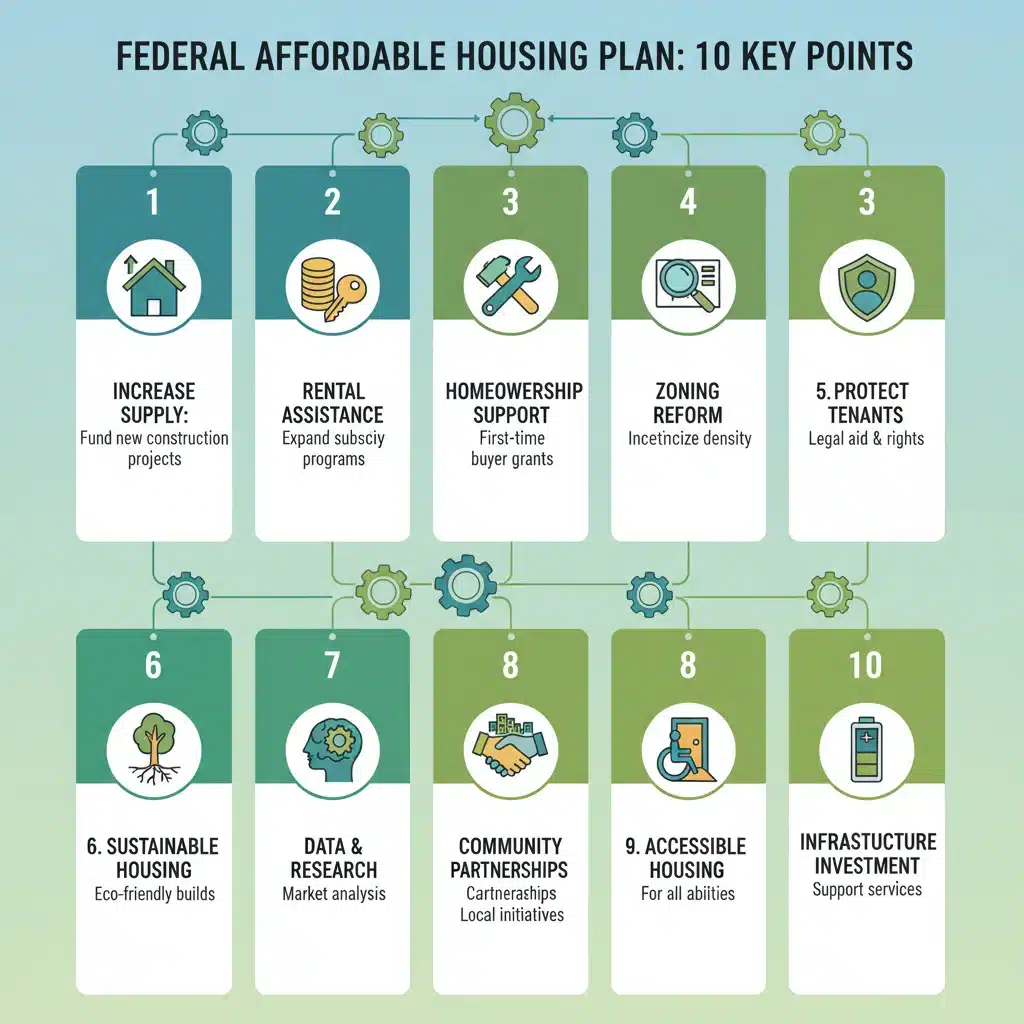
The federal task force’s 10-point affordable housing plan is a comprehensive framework designed to address the housing crisis from multiple angles. Each point is meticulously crafted to tackle specific challenges and leverage both existing and new resources. Let’s explore each component in detail:
- Expanding Federal Funding for Housing Programs: This cornerstone of the affordable housing plan proposes a significant increase in appropriations for core federal housing programs, such as the Low-Income Housing Tax Credit (LIHTC), Section 8 rental assistance, and the HOME Investment Partnerships Program. Enhanced funding will enable more projects to move forward, support more families, and provide the necessary capital for developing and preserving affordable units.
- Streamlining Regulatory Processes: A major hurdle for affordable housing development is often complex and lengthy regulatory approval processes at local, state, and federal levels. This point of the affordable housing plan aims to identify and eliminate unnecessary bureaucratic red tape, encouraging faster project approvals while maintaining essential safety and environmental standards. This includes promoting “by-right” zoning for affordable developments in appropriate areas.
- Incentivizing Local Zoning Reform: Many local zoning ordinances restrict density, mandate large lot sizes, and prohibit multi-family housing, thereby limiting the supply of affordable units. The affordable housing plan proposes federal incentives, such as grants or preferential funding, for localities that adopt more inclusive zoning practices, including allowing for accessory dwelling units (ADUs), mixed-use developments, and higher-density housing near transit hubs.
- Leveraging Federal Land and Assets: The federal government owns vast tracts of underutilized land and properties. This point advocates for identifying suitable federal assets that can be repurposed or developed for affordable housing, often in partnership with local governments and non-profit organizations. This strategy can significantly reduce land acquisition costs, a major component of housing development.
- Promoting Innovative Construction Technologies: To accelerate construction and reduce costs, the affordable housing plan encourages the adoption of modern construction methods, such as modular housing, prefabrication, and sustainable building materials. Federal grants and technical assistance will be provided to developers and builders experimenting with these efficient approaches.
- Strengthening Rental Assistance and Eviction Prevention: Beyond creating new units, the affordable housing plan also focuses on supporting existing vulnerable populations. This includes expanding rental assistance programs to prevent homelessness and providing resources for legal aid and mediation services to avert evictions, ensuring housing stability for those most at risk.
- Investing in Workforce Development for Construction Trades: A shortage of skilled labor can impede housing construction. This point proposes federal investments in vocational training programs, apprenticeships, and community college initiatives to build a robust workforce capable of meeting the demands of increased housing development.
- Addressing Discriminatory Housing Practices: Ensuring equitable access to housing is paramount. The affordable housing plan commits to robust enforcement of fair housing laws, combating discriminatory practices in lending, renting, and selling, and promoting inclusive communities where everyone has a fair chance at securing housing.
- Fostering Public-Private Partnerships: Collaboration between government entities, private developers, and non-profit organizations is key to scaling affordable housing initiatives. This point emphasizes creating new mechanisms and incentives for these partnerships, sharing risks and resources to achieve common goals.
- Data Collection and Performance Tracking: To ensure accountability and effectiveness, the affordable housing plan includes provisions for enhanced data collection on housing needs, supply, and affordability metrics. Regular reporting and performance tracking will allow for continuous evaluation and adjustment of strategies, ensuring resources are deployed optimally.
Anúncios
Expected Impact and Challenges of the Affordable Housing Plan
The implementation of this ambitious 10-point affordable housing plan is anticipated to bring about transformative changes in the nation’s housing landscape. The primary objective of increasing affordable housing by 2 million units is poised to alleviate significant pressure on the rental market, potentially leading to more stable and reasonable housing costs across the board. For low-income families and individuals, this could mean the difference between housing insecurity and the stability needed to pursue education, employment, and better health outcomes. Economically, the increased construction activity spurred by the affordable housing plan is expected to generate numerous jobs in the construction sector and related industries, providing a boost to local economies. Furthermore, by reducing homelessness and housing instability, communities can reallocate resources from crisis management to long-term development and support services, fostering stronger, more resilient neighborhoods.
However, the path to achieving these goals is not without its challenges. One of the most significant hurdles will be securing sustained political will and bipartisan support to ensure consistent funding and policy implementation over the long term. Housing initiatives often face resistance from local communities concerned about changes to neighborhood character or property values, commonly referred to as ‘Not In My Backyard’ (NIMBY) sentiment. Overcoming these local objections will require effective community engagement, transparent communication, and compelling demonstrations of the benefits of affordable housing. Additionally, the sheer scale of the affordable housing plan demands efficient coordination across multiple federal agencies, state governments, and thousands of local jurisdictions, each with its own unique regulatory environment and political considerations. Inflationary pressures on construction materials and labor costs could also pose a threat to the financial viability of projects, necessitating flexible funding mechanisms and innovative cost-saving strategies. Addressing these challenges effectively will be crucial for the successful realization of the affordable housing plan’s ambitious targets and for truly making a dent in the national housing crisis.
The Role of Local Communities and Stakeholders in the Affordable Housing Plan
While the federal task force provides the overarching framework, the success of the 10-point affordable housing plan will heavily depend on the active participation and collaboration of local communities and a diverse range of stakeholders. Local governments are on the front lines of housing development and policy implementation. Their willingness to embrace zoning reforms, streamline permitting processes, and allocate local resources to complement federal initiatives will be critical. The affordable housing plan explicitly incentivizes such local action, recognizing that a top-down approach alone cannot solve deeply localized issues. Community organizations, non-profits, and advocacy groups also play an indispensable role. They are often best positioned to identify specific local housing needs, provide direct services to vulnerable populations, and act as trusted intermediaries between residents and developers. Their input is vital in ensuring that new affordable housing developments are not only physically sound but also culturally sensitive and integrated into existing community fabrics.
Private sector developers, both for-profit and non-profit, will be essential partners in constructing and managing the new affordable housing units. The affordable housing plan’s focus on public-private partnerships aims to harness the efficiency and innovation of the private sector while ensuring that projects align with public good objectives. Financial institutions, including banks and credit unions, will also be key in providing the necessary financing for these large-scale projects, often leveraging federal guarantees and incentives. Furthermore, individual citizens have a role to play by engaging in local discussions, supporting inclusive housing policies, and understanding the broader societal benefits of having diverse and affordable housing options within their communities. Education and advocacy will be paramount in dispelling misconceptions about affordable housing and building a consensus for its development. The integrated approach of the affordable housing plan underscores the idea that solving the housing crisis is a shared responsibility, requiring concerted effort from all levels of government, the private sector, and the citizenry.

Long-Term Vision and Sustainability of the Affordable Housing Plan
The federal task force’s affordable housing plan is not merely a short-term fix; it embodies a long-term vision for a more equitable and stable housing future. Beyond the immediate goal of 2 million new units, the plan aims to establish sustainable frameworks and policies that can adapt to future demographic shifts, economic fluctuations, and environmental challenges. A key aspect of this long-term vision is the emphasis on sustainable building practices and energy efficiency in new affordable housing developments. By promoting green building technologies and designs, the affordable housing plan seeks to reduce operating costs for residents, lessen the environmental footprint of housing, and contribute to broader climate change mitigation efforts. This focus on sustainability ensures that the housing created today will remain viable and beneficial for generations to come, rather than becoming a burden.
Moreover, the affordable housing plan recognizes the importance of ongoing research and development in housing policy and construction. The commitment to data collection and performance tracking is crucial for continuous learning and refinement of strategies. This adaptive management approach will allow the federal government and its partners to identify what works best, scale successful initiatives, and pivot away from less effective ones. The plan also implicitly encourages innovation in financing models, community planning, and supportive services, fostering an ecosystem where new solutions to housing challenges can emerge and thrive. By investing in workforce development for construction trades, the plan is also building capacity for future housing needs, ensuring a skilled labor force is available to maintain and expand the housing stock. Ultimately, the long-term success of this affordable housing plan will be measured not just by the number of units built, but by its ability to create resilient, inclusive, and thriving communities where everyone has access to safe, decent, and affordable housing as a fundamental right.