Top 5 US Universities for STEM in 2026: Post-Graduation Success Analysis

Anúncios
The Top 5 US Universities for STEM in 2026: A Data-Driven Analysis of Post-Graduation Success Rates
Choosing the right university for a Science, Technology, Engineering, and Mathematics (STEM) degree is one of the most pivotal decisions a prospective student will make. The landscape of higher education is constantly evolving, and with it, the demands of the global job market. As we look towards 2026, understanding which institutions are truly excelling in preparing their graduates for unparalleled post-graduation success in STEM fields becomes paramount. This comprehensive analysis dives deep into the metrics that matter, moving beyond traditional rankings to focus on tangible outcomes: employment rates, median salaries, career trajectory, and alumni networks. Our goal is to provide a data-driven guide to the top 5 US universities that consistently deliver exceptional results for their STEM graduates.
The importance of a strong STEM education cannot be overstated. These fields are the engines of innovation, driving economic growth, technological advancements, and solutions to some of humanity’s most pressing challenges. Therefore, investing in an education from an institution with a proven track record for post-graduation success in STEM is an investment in a highly rewarding and impactful future. This article will explore the methodologies used to identify these elite universities, offering insights into what makes them stand out and how their programs translate into real-world advantages for their alumni. We’re not just looking at academic rigor, but at the comprehensive ecosystem these universities cultivate to ensure their graduates thrive.
Anúncios
Understanding Post-Graduation Success in STEM: Beyond the Surface
When we talk about post-graduation success in STEM, what exactly do we mean? It’s far more nuanced than simply securing a job. Our analysis considers a multifaceted approach, encompassing several key indicators:
- Employment Rates in Related Fields: A high percentage of graduates finding employment directly within their STEM discipline, indicating the relevance and demand for their skills.
- Median Starting and Mid-Career Salaries: Financial compensation is a strong indicator of the value employers place on a university’s graduates. We look at both initial earnings and long-term earning potential.
- Career Trajectory and Advancement: How quickly do graduates move into leadership roles or positions of increasing responsibility? This speaks to the quality of foundational education and professional development support.
- Alumni Network Strength and Engagement: A robust and active alumni network provides invaluable mentorship, networking opportunities, and job referrals, significantly boosting career prospects.
- Research and Innovation Output: Universities that are at the forefront of research often provide students with cutting-edge experiences and connections to industry leaders, directly impacting their post-graduation opportunities.
- Entrepreneurial Success: The number of startups founded by graduates and the success of these ventures highlight an institution’s ability to foster innovation and business acumen.
- Graduate School Placement: For those pursuing advanced degrees, the acceptance rates into top-tier graduate programs are a crucial metric.
By considering these factors holistically, we gain a clearer picture of true STEM university success. Our data-driven approach utilizes publicly available statistics, institutional reports, alumni surveys, and independent research to compile a robust and reliable assessment. The goal is to move beyond subjective perceptions and provide concrete evidence of where students can expect the most impactful returns on their educational investment.
The universities that consistently rank high in these metrics are often those that have strong ties with industry, offer extensive internship programs, and provide robust career services tailored specifically for STEM fields. They understand that a degree is just the beginning, and they invest heavily in ensuring their graduates are not only knowledgeable but also highly employable and prepared for the challenges of the modern workforce. This commitment to student outcomes is a hallmark of the institutions we’ve identified.
Methodology for Identifying Top STEM Universities
Our methodology for selecting the top 5 US universities for STEM in 2026 is rigorous and comprehensive, designed to capture the true essence of post-graduation success. We started with a broad list of over 300 US institutions renowned for their STEM programs and applied a multi-stage filtering process:
- Initial Data Collection: Gathered data on employment rates, salary statistics (starting and mid-career), graduate school acceptance rates, and research funding from official university reports, the National Center for Education Statistics (NCES), and reputable external surveys (e.g., Payscale, Glassdoor, LinkedIn data).
- Alumni Network Analysis: Utilized LinkedIn data and alumni association reports to assess the size, industry distribution, and engagement levels of each university’s STEM alumni network. The strength of the network is a significant predictor of future career opportunities and mentorship.
- Industry Partnerships and Internships: Evaluated the number and quality of industry partnerships, co-op programs, and internship opportunities available to STEM students. Direct industry exposure is critical for post-graduation readiness.
- Research and Innovation Ecosystem: Assessed the volume and impact of faculty research, access to state-of-the-art laboratories, and opportunities for undergraduate research. Universities with vibrant research cultures often produce more innovative and sought-after graduates.
- Entrepreneurship Support: Looked at the availability of incubators, accelerators, and entrepreneurial programs specifically for STEM students, as well as the track record of alumni founding successful startups.
- Qualitative Assessment (Expert Panel): A panel of educators, industry recruiters, and STEM professionals reviewed the quantitative data, providing qualitative insights into program quality, curriculum relevance, and reputation within specific STEM sectors.
Each institution was scored across these dimensions, with a particular emphasis on the post-graduation success metrics. Universities demonstrating consistent excellence across the board, year after year, emerged as the frontrunners. This robust methodology ensures that our list is not merely based on academic prestige but on tangible, measurable outcomes that directly benefit students after they leave campus. We believe this focus on results provides the most valuable guidance for prospective STEM students.
Anúncios
The dynamic nature of STEM fields means that a university’s curriculum and resources must constantly adapt. Our analysis also subtly factored in the agility and forward-thinking nature of these institutions – how quickly they integrate new technologies, emerging research areas, and industry demands into their programs. This adaptability ensures that graduates are not just prepared for today’s job market, but for the challenges and opportunities of tomorrow.
The Top 5 US Universities for STEM in 2026: An In-Depth Look
1. Massachusetts Institute of Technology (MIT)
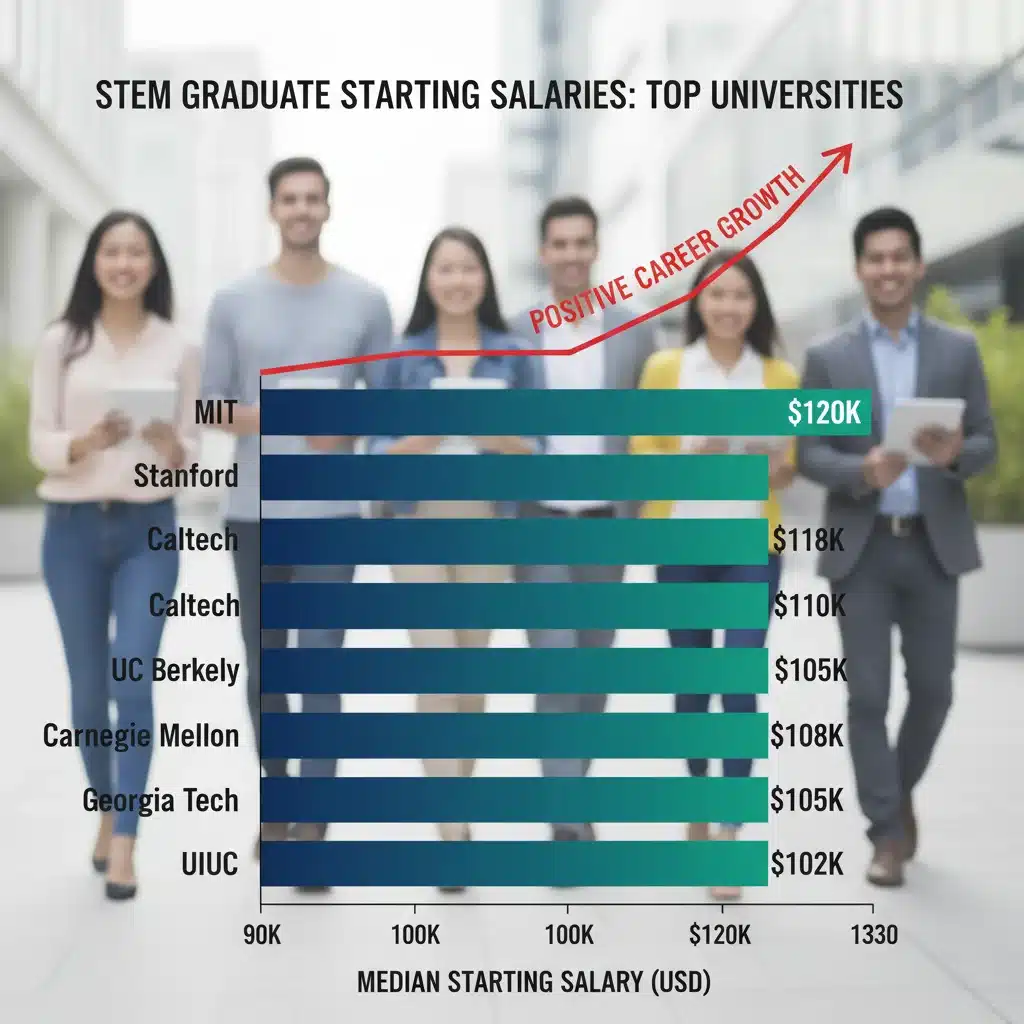
Why it Ranks #1: MIT consistently leads in nearly every metric of STEM university success. Its graduates are highly sought after by top-tier tech companies, research institutions, and startups alike. The post-graduation employment rate in related fields is virtually 100%, with median starting salaries significantly above the national average for STEM graduates. MIT’s unparalleled research output, coupled with its strong emphasis on hands-on learning and entrepreneurial spirit, creates an environment where innovation thrives. Alumni frequently occupy leadership positions across diverse STEM sectors, and the network is incredibly powerful and supportive.
- Key Programs: Computer Science, Electrical Engineering, Mechanical Engineering, Aerospace Engineering, Materials Science, Biological Engineering.
- Post-Graduation Success Highlights: Highest median starting salaries among all US universities for STEM graduates; exceptional placement in Silicon Valley, biotech, and finance; high rate of alumni founding successful companies.
- Unique Strengths: World-renowned faculty, cutting-edge research facilities, a culture of intense collaboration and problem-solving, and a global alumni network that opens doors worldwide.
MIT’s commitment to pushing the boundaries of scientific and technological knowledge directly translates into an education that prepares students for the most challenging and rewarding careers. Their graduates are not just employees; they are innovators, leaders, and problem-solvers who are redefining their respective fields. The institution’s proactive approach to industry engagement ensures that its curriculum remains relevant and its students gain practical experience throughout their studies.
2. Stanford University
Why it Ranks #2: Located in the heart of Silicon Valley, Stanford offers an unrivaled ecosystem for STEM students, particularly those interested in technology, entrepreneurship, and innovation. Its engineering and computer science programs are legendary, boasting high employment rates and impressive salary outcomes. Stanford’s close ties with tech giants and venture capital firms provide students with unparalleled internship and job opportunities. The university’s strong emphasis on interdisciplinary research and its entrepreneurial culture are key drivers of its graduates’ success.
- Key Programs: Computer Science, Electrical Engineering, Bioengineering, Aeronautics & Astronautics, Data Science.
- Post-Graduation Success Highlights: Exceptional placement in tech startups and established firms; strong venture capital funding for alumni-founded companies; high average mid-career salaries.
- Unique Strengths: Proximity to Silicon Valley, world-class research centers (e.g., SLAC National Accelerator Laboratory), robust entrepreneurial support, and a highly influential alumni network in tech.
Stanford’s blend of academic excellence and real-world application, fueled by its location, makes it a powerhouse for STEM talent. Students benefit from direct access to industry leaders, cutting-edge research projects, and a culture that encourages risk-taking and innovation. This environment fosters graduates who are not only technically proficient but also possess the business acumen to turn ideas into impactful ventures.
3. California Institute of Technology (Caltech)
Why it Ranks #3: Caltech is a smaller institution but punches well above its weight in terms of STEM impact and graduate success. Known for its intense academic rigor and focus on fundamental scientific research, Caltech produces graduates who are exceptionally well-prepared for careers in academia, advanced research, and highly specialized technical roles. Its Ph.D. placement rates are among the highest globally, and its alumni are often at the forefront of scientific discovery and engineering breakthroughs. The employment outcomes and salary potential reflect the elite training received.
- Key Programs: Physics, Astronomy, Applied Physics, Computer Science, Electrical Engineering, Chemical Engineering.
- Post-Graduation Success Highlights: Outstanding placement in top Ph.D. programs and research institutions; high demand from specialized industries like aerospace and defense; excellent salary progression.
- Unique Strengths: Small student-to-faculty ratio, unparalleled access to leading scientists, affiliation with NASA’s Jet Propulsion Laboratory (JPL), and a deeply collaborative research environment.
Caltech’s unique educational model, emphasizing intense research and a deep understanding of scientific principles, cultivates a cadre of highly specialized and innovative thinkers. Graduates from Caltech are not just technically skilled; they are critical thinkers and problem-solvers capable of tackling the most complex scientific and engineering challenges. Their contributions often lead to groundbreaking advancements in various STEM fields.
4. University of California, Berkeley (UC Berkeley)
Why it Ranks #4: UC Berkeley consistently ranks among the top public universities globally for STEM, particularly in engineering and computer science. Its graduates are highly valued for their strong theoretical foundations combined with practical application skills. Berkeley’s proximity to the Bay Area provides abundant opportunities for internships and employment in tech, biotech, and renewable energy sectors. The university’s commitment to research and public service also means graduates are often involved in projects with significant societal impact.
- Key Programs: Electrical Engineering & Computer Sciences (EECS), Mechanical Engineering, Civil & Environmental Engineering, Bioengineering, Data Science.
- Post-Graduation Success Highlights: High employment rates in diverse tech and engineering roles; strong presence in startups and established companies in the Bay Area; excellent graduate school placement.
- Unique Strengths: Strong research focus, diverse and inclusive student body, numerous interdisciplinary research centers, and a powerful alumni network across various industries.
UC Berkeley offers a vibrant and intellectually stimulating environment where students are challenged to excel. Its public university status makes it accessible to a broader range of students, while its academic rigor and research opportunities rival those of private institutions. The university’s strong ties to both academic research and industrial innovation ensure its graduates are well-equipped for a wide array of career paths in STEM.
5. Carnegie Mellon University (CMU)
Why it Ranks #5: Carnegie Mellon is a global leader in computer science, robotics, and drama, but its overall STEM programs, particularly in engineering and artificial intelligence, are exceptional. CMU graduates are known for their strong technical skills, problem-solving abilities, and collaborative spirit. The university has strong ties to industry, facilitating excellent internship and employment opportunities, especially in software development, AI, and advanced manufacturing. Its graduates consistently achieve high starting salaries and rapid career advancement.
- Key Programs: Computer Science, Robotics, Electrical & Computer Engineering, Software Engineering, Data Science.
- Post-Graduation Success Highlights: Top-tier placement in tech companies (especially in AI/ML and software engineering); high demand for specialized skills; strong entrepreneurial ecosystem.
- Unique Strengths: Pioneering research in AI and robotics, interdisciplinary approach to complex problems, strong industry partnerships, and a highly collaborative academic environment.
Carnegie Mellon’s innovative approach to education, particularly in emerging technologies, makes its graduates incredibly valuable in a rapidly changing technological landscape. The university’s focus on practical, project-based learning ensures that students gain hands-on experience that is directly applicable to industry needs. This forward-thinking curriculum and strong industry connections are key contributors to the outstanding post-graduation success of CMU alumni.
Factors Contributing to STEM University Success
What sets these top institutions apart? It’s a combination of several critical factors that collectively create an environment conducive to exceptional STEM university success:
- World-Class Faculty and Research Opportunities: Access to leading experts and participation in groundbreaking research projects provide students with invaluable experience and mentorship. These faculty members are often at the forefront of their fields, bringing cutting-edge knowledge directly into the classroom and laboratory.
- Rigorous and Relevant Curriculum: Programs are continuously updated to reflect the latest advancements in STEM fields and industry demands. This ensures that graduates are equipped with the most current and sought-after skills, making them highly competitive in the job market.
- State-of-the-Art Facilities and Resources: Modern laboratories, advanced computing resources, and specialized equipment are essential for hands-on learning and research. These resources allow students to work with technologies they will encounter in their professional careers.
- Strong Industry Connections and Internship Programs: Partnerships with leading companies provide students with real-world experience, networking opportunities, and often a direct pipeline to employment after graduation. These connections are vital for transitioning from academia to industry.
- Robust Career Services Tailored for STEM: Dedicated career counseling, resume workshops, interview preparation, and job fairs specifically for STEM students significantly enhance employment prospects. These services understand the unique demands of STEM careers.
- Vibrant Alumni Network: An engaged alumni base offers mentorship, job referrals, and a sense of community that extends far beyond graduation. The power of a strong network cannot be underestimated in career advancement.
- Emphasis on Soft Skills: Beyond technical expertise, these universities also foster critical thinking, problem-solving, communication, and teamwork – skills that are increasingly vital for success in any STEM profession.
- Entrepreneurial Ecosystem: Support for innovation, startup incubators, and access to venture capital resources encourage students to develop their own ventures, contributing to economic growth and creating new opportunities.
These elements combine to create a holistic educational experience that not only imparts knowledge but also builds character, fosters innovation, and prepares students for leadership roles in their chosen fields. The institutions that consistently prioritize and invest in these areas are the ones that produce the most successful STEM graduates.

The Future of STEM Education and Career Prospects
As we move towards 2026 and beyond, the demand for highly skilled STEM professionals is only expected to grow. Fields such as artificial intelligence, biotechnology, cybersecurity, renewable energy, and advanced materials science are expanding rapidly, creating unprecedented career opportunities. The universities highlighted in this analysis are not just keeping pace with these changes; they are actively shaping the future of STEM through their research and the caliber of their graduates.
Prospective students should consider not only the immediate benefits of attending a top STEM institution but also the long-term career resilience and adaptability such an education provides. The foundational knowledge, critical thinking skills, and networking opportunities gained at these universities will serve graduates throughout their professional lives, enabling them to navigate evolving industries and embrace new challenges.
Furthermore, the interdisciplinary nature of modern STEM challenges means that universities fostering collaboration across different scientific and engineering disciplines will be increasingly valuable. The ability to integrate knowledge from various fields – for example, combining biology with computer science to develop new medical technologies – is a hallmark of truly innovative problem-solving. The top institutions are increasingly emphasizing these cross-disciplinary approaches.
For those aspiring to make a significant impact in the world, a STEM degree from one of these top universities represents a powerful launchpad. It’s an investment that promises not just a job, but a career filled with innovation, discovery, and the potential to contribute meaningfully to society. The data clearly indicates that these institutions are not just educating students; they are empowering the next generation of global leaders and innovators.
Conclusion: Making an Informed Choice for Your STEM Future
The decision of where to pursue your STEM education is monumental. Our data-driven analysis of the top 5 US universities for STEM in 2026, focusing on post-graduation success rates, aims to provide clarity and confidence in this choice. MIT, Stanford, Caltech, UC Berkeley, and Carnegie Mellon University stand out as institutions that not only offer world-class academic programs but also consistently deliver exceptional career outcomes for their graduates.
These universities excel in fostering an environment of innovation, providing unparalleled research opportunities, maintaining strong industry connections, and cultivating powerful alumni networks. Their commitment to preparing students for the demands of the modern and future STEM workforce is evident in the high employment rates, impressive salaries, and significant career trajectories of their alumni. Choosing one of these institutions means investing in a future where you are not just a participant in the STEM revolution, but a leader and an innovator.
Prospective students are encouraged to research these universities further, explore their specific programs, and consider how their unique strengths align with individual career aspirations. While rankings provide a valuable guide, personal fit and program specifics are also crucial. However, the consistent data on post-graduation success from these five institutions offers a compelling argument for their inclusion at the very top of any aspiring STEM professional’s list. Your future in STEM starts with a strong foundation, and these universities offer precisely that.
Ultimately, the goal is to equip yourself with the knowledge, skills, and connections that will allow you to thrive in a competitive and ever-evolving global landscape. The institutions highlighted here have proven, through tangible results, their ability to do just that. They are the beacons of STEM university success, guiding the next generation of scientists, engineers, and technologists towards impactful and fulfilling careers.