Future of K-12 Education 2026: Policy Changes & Student Outcomes
Anúncios
The Future of K-12 Education in 2026: Key Policy Changes and Their Effect on Student Learning Outcomes
The landscape of education is in a perpetual state of evolution, driven by technological advancements, societal shifts, and a growing understanding of effective pedagogical practices. As we look towards 2026, the K-12 education sector is poised for significant transformations, largely influenced by emerging policy changes. These shifts are not merely administrative adjustments; they are fundamental reforms designed to reshape student learning outcomes, redefine the roles of educators, and prepare the next generation for an increasingly complex world. Understanding the impending changes in K-12 education 2026 is crucial for policymakers, educators, parents, and students alike, as they will dictate the trajectory of academic and personal development for millions.
The year 2026 promises to be a landmark year for K-12 education, with several key policy initiatives expected to come into full effect. These policies are often a response to current challenges, such as learning gaps exacerbated by recent global events, the need for enhanced digital literacy, and the imperative to foster critical thinking and socio-emotional skills. This article will delve into the anticipated policy changes, explore their potential impact on student learning outcomes, and discuss how stakeholders can prepare for this exciting new era in K-12 education.
Anúncios
Anticipated Policy Shifts in K-12 Education 2026
Several major themes are expected to dominate the policy agenda for K-12 education 2026. These themes reflect a broader societal recognition of the need for adaptable, equitable, and future-ready educational systems. Understanding these areas will provide a framework for the changes to come.
1. Enhanced Focus on Digital Literacy and Integration of AI
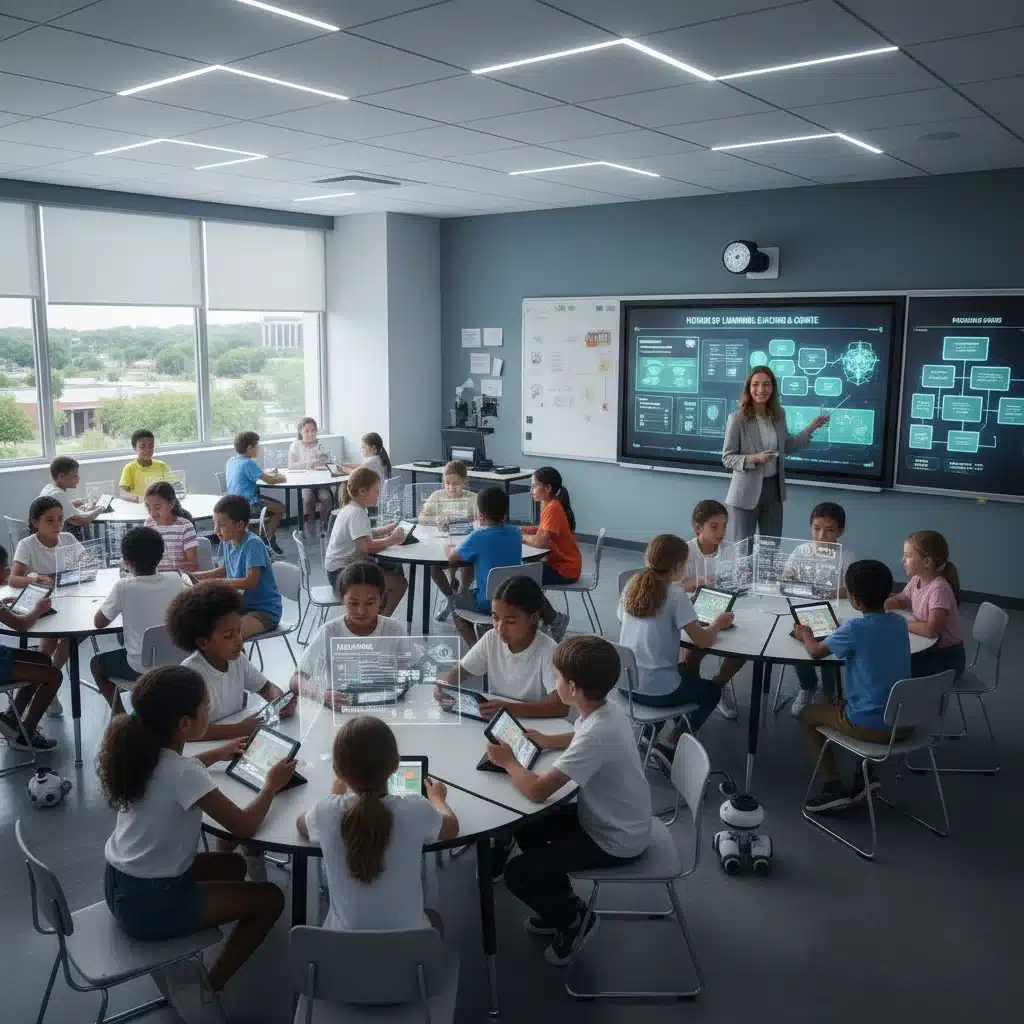
With technology advancing at an unprecedented pace, policies in K-12 education 2026 are likely to mandate a more robust integration of digital literacy across all curricula. This goes beyond basic computer skills, encompassing critical evaluation of online information, digital citizenship, and the ethical implications of artificial intelligence (AI). Schools will likely receive increased funding and resources to implement AI-powered learning tools, personalized learning platforms, and cybersecurity education. The aim is to ensure that students are not just consumers of technology but informed, responsible, and creative digital citizens.
The integration of AI will also extend to administrative functions, potentially streamlining tasks for educators and allowing them to focus more on direct instruction and student support. Policies may encourage the use of AI for adaptive assessments, identifying learning patterns, and providing tailored feedback, thereby enhancing the efficiency and effectiveness of the educational process in K-12 education 2026.
2. Personalized Learning Pathways and Differentiated Instruction
The one-size-fits-all model of education has long been critiqued for failing to meet the diverse needs of all students. Policies in K-12 education 2026 are expected to push strongly towards personalized learning pathways. This involves curriculum flexibility, individualized pacing, and a greater emphasis on project-based learning that caters to different learning styles and interests. The goal is to maximize each student’s potential by allowing them to progress at their own pace and explore subjects in depth that genuinely engage them.
Differentiated instruction, a pedagogical approach where teachers tailor instruction to meet individual student needs, will likely become a mandated practice, supported by professional development initiatives. This shift recognizes that students come with varying prior knowledge, readiness levels, and learning preferences, and effective education must account for these differences. Policies will likely provide frameworks and resources for schools to implement these strategies effectively.
Anúncios
3. Increased Emphasis on Social-Emotional Learning (SEL)
The importance of social-emotional skills – such as self-awareness, self-management, social awareness, relationship skills, and responsible decision-making – has gained significant traction. Policies for K-12 education 2026 are expected to embed SEL formally into curricula, recognizing that these skills are foundational for academic success and lifelong well-being. This might include dedicated SEL programs, integration of SEL competencies into core subjects, and comprehensive teacher training on fostering emotional intelligence in students.
The aim is to create supportive learning environments where students feel safe, connected, and empowered to navigate challenges, resolve conflicts, and build healthy relationships. This holistic approach to student development is seen as crucial for addressing mental health concerns and preparing students for the complexities of adult life.
4. Reimagined Assessment Strategies
Traditional standardized testing has faced increasing scrutiny. Policies in K-12 education 2026 are likely to advocate for more diverse and authentic assessment methods. This could include a greater reliance on performance-based assessments, portfolios, project-based evaluations, and continuous formative assessments that provide real-time feedback. The focus will shift from merely measuring knowledge recall to evaluating critical thinking, problem-solving, creativity, and the application of skills in real-world contexts.
These new assessment strategies aim to provide a more comprehensive picture of student learning and growth, moving beyond a single test score. They will also likely be more closely aligned with personalized learning pathways, allowing for assessments that are tailored to individual student progress and learning goals.
5. Workforce Development and Career Readiness Integration
As the job market evolves, so too must the preparation students receive. Policies for K-12 education 2026 are expected to strengthen the links between education and workforce development. This could involve expanding vocational and technical education programs, fostering stronger partnerships with local industries, and integrating career exploration and skill development earlier in the curriculum. The emphasis will be on equipping students with practical skills, critical thinking, and adaptability necessary for future careers, including those that may not yet exist.
This includes promoting pathways to skilled trades, technology fields, and entrepreneurship, ensuring that all students have access to opportunities that align with their interests and the demands of the modern economy. Early exposure to various career paths and practical work experiences will be a cornerstone of this policy direction.
Impact on Student Learning Outcomes
The anticipated policy changes in K-12 education 2026 are designed with a clear objective: to significantly improve student learning outcomes across various dimensions. The effects will be multifaceted, touching upon academic achievement, skill development, and overall student well-being.
Enhanced Academic Achievement through Personalization
With personalized learning pathways and differentiated instruction becoming more prevalent, students are expected to achieve higher academic outcomes. When instruction is tailored to their individual needs, strengths, and learning styles, students are more likely to grasp complex concepts, remain engaged, and develop a deeper understanding of subjects. AI-powered tools, providing adaptive content and immediate feedback, will further support this, addressing learning gaps proactively and accelerating progress for advanced learners. This individualized approach in K-12 education 2026 will ensure that fewer students are left behind and more are challenged appropriately.

Development of 21st-Century Skills
The heightened focus on digital literacy, critical thinking, problem-solving, and collaboration through project-based learning will equip students with essential 21st-century skills. These are not just academic competencies but vital attributes for success in higher education and the modern workforce. Students will learn to navigate digital environments safely and effectively, analyze information critically, communicate complex ideas, and work collaboratively to solve real-world problems. The emphasis on these skills within K-12 education 2026 will ensure graduates are well-prepared for dynamic professional landscapes.
Improved Social-Emotional Well-being
Integrating SEL into the core curriculum will have a profound impact on students’ social-emotional well-being. By explicitly teaching skills such as empathy, self-regulation, and responsible decision-making, schools will foster more inclusive and supportive environments. This will likely lead to a reduction in behavioral issues, improved student-teacher relationships, and enhanced resilience in students. A strong foundation in SEL will also contribute to better mental health outcomes, allowing students to cope with stress, build positive relationships, and thrive both inside and outside the classroom. This holistic development is a key outcome for K-12 education 2026.
Greater Equity and Access
Many policy discussions around K-12 education 2026 are centered on reducing educational disparities. Policies aimed at providing equitable access to technology, high-quality instruction, and specialized support services will strive to close achievement gaps among diverse student populations. Funding initiatives, professional development for educators in underserved areas, and community partnerships will play a crucial role in ensuring that all students, regardless of their background or location, have the opportunity to succeed. This commitment to equity is a cornerstone of the future of K-12 education.
Enhanced Career Readiness
The strengthened link between K-12 education and workforce development means students will graduate with a clearer understanding of career pathways and the skills required for them. Early exposure to vocational training, internships, and career counseling will enable students to make more informed decisions about their post-secondary education and career choices. This will lead to a more prepared and adaptable workforce, benefiting both individuals and the economy as a whole. The policies of K-12 education 2026 are designed to bridge the gap between academic learning and practical application.
Implications for Educators and School Systems
The policy changes in K-12 education 2026 will necessitate significant adaptations from educators and school systems. These changes will require new approaches to teaching, professional development, and resource allocation.
Evolving Role of Teachers
The role of teachers will evolve from primarily being disseminators of information to facilitators of learning, mentors, and instructional designers. With personalized learning and AI integration, teachers will spend less time on rote instruction and more on guiding student exploration, fostering critical thinking, and providing individualized support. This shift will require educators to be highly adaptable, technologically proficient, and skilled in differentiating instruction for diverse learners.

Increased Need for Professional Development
To effectively implement new policies, extensive and ongoing professional development will be crucial. Teachers will need training in using new technologies, implementing personalized learning strategies, integrating SEL into their teaching, and utilizing new assessment methods. School systems will need to invest significantly in continuous learning opportunities for their staff, ensuring they are equipped with the skills and knowledge required for the K-12 education 2026 environment.
Curriculum Redesign and Flexibility
School districts will likely undertake significant curriculum redesign efforts to align with new policy mandates. This will involve incorporating digital literacy, SEL, and career readiness themes across all subjects. Curricula will need to be more flexible, allowing for personalized pathways and project-based learning. This redesign will also require collaboration among educators, curriculum specialists, and potentially external experts to ensure relevance and effectiveness.
Resource Allocation and Infrastructure Investment
Implementing these changes will require substantial investment in technology infrastructure, digital resources, and specialized personnel. Schools will need to ensure reliable internet access, adequate devices for all students, and robust cybersecurity measures. Additionally, resources will be needed for professional development, counseling services, and potentially smaller class sizes to facilitate personalized attention. Policies will likely include funding mechanisms to support these essential investments for K-12 education 2026.
Data-Driven Decision Making
With the integration of AI and new assessment methods, schools will have access to a wealth of student data. Policies will encourage the use of this data to inform instructional practices, identify areas for improvement, and track student progress effectively. Educators and administrators will need to develop skills in data analysis and interpretation to make informed decisions that optimize learning outcomes. This data-driven approach will be a hallmark of K-12 education 2026.
Challenges and Considerations
While the outlook for K-12 education 2026 is largely positive, implementing these extensive policy changes will not be without challenges. Addressing these proactively will be key to successful transformation.
Funding and Resource Disparities
Ensuring equitable funding and resources across all districts, especially between affluent and underserved communities, remains a significant challenge. Policies must include robust mechanisms to close these gaps, ensuring that all schools have the necessary infrastructure and human capital to implement new initiatives effectively. Without adequate and equitable funding, the promise of personalized learning and advanced technology could exacerbate existing inequalities.
Teacher Burnout and Workload
The evolving role of teachers and the adoption of new methodologies could lead to increased workload and potential burnout if not managed carefully. Policies must consider sustainable implementation strategies, provide adequate support staff, and ensure reasonable expectations for educators. Teacher well-being and retention are critical for the success of any educational reform in K-12 education 2026.
Digital Divide and Access
Despite efforts to bridge the digital divide, disparities in home internet access and device availability persist. Policies must continue to address these inequities, ensuring that technology-integrated learning does not disadvantage students from low-income households. This includes providing devices, internet hotspots, and community learning centers to ensure universal access to digital resources.
Curriculum Development and Alignment
Developing and aligning new curricula that effectively integrate digital literacy, SEL, and career readiness while maintaining academic rigor will be a complex undertaking. It requires careful planning, collaboration, and ongoing evaluation to ensure that the curriculum is coherent, relevant, and effective for all students.
Parental and Community Engagement
Successful implementation of new policies also hinges on strong parental and community engagement. Communicating the rationale behind changes, involving parents in decision-making processes, and providing resources to support learning at home will be crucial. Building a collaborative ecosystem involving schools, families, and communities is essential for fostering a supportive learning environment in K-12 education 2026.
Conclusion
The future of K-12 education in 2026 is poised for transformative changes driven by forward-thinking policy initiatives. An enhanced focus on digital literacy and AI integration, personalized learning pathways, robust social-emotional learning, reimagined assessment strategies, and stronger links to workforce development will collectively redefine the educational experience. These shifts are designed to foster academic excellence, cultivate essential 21st-century skills, and promote holistic student well-being, ultimately leading to improved student learning outcomes.
While challenges related to funding, teacher support, and equitable access must be addressed, the overall direction points towards a more adaptable, inclusive, and effective educational system. As stakeholders prepare for these significant changes in K-12 education 2026, a collaborative and proactive approach will be essential to harness the full potential of these reforms and equip the next generation for a future of endless possibilities. The journey towards a more dynamic and student-centered educational paradigm is well underway, promising a brighter future for learners across the nation.