Inflation’s Impact: Navigating Your 2026 Investment Portfolio

Anúncios
In the intricate dance of global economics, inflation stands as a formidable force, capable of reshaping the landscape of personal and institutional wealth. For investors, understanding its nuances and preparing for its effects is not merely advisable; it is imperative. As we look towards 2026, the recent inflation trends, notably an average of 3.5% over the past six months, cast a significant shadow, demanding a strategic re-evaluation of investment portfolios. This article delves deep into how these trends are likely to impact your financial future, providing data-driven insights and actionable strategies to navigate the evolving economic climate. The goal is to equip you with the knowledge to not only protect your assets but also to identify opportunities for growth, ensuring your inflation investment portfolio remains robust and resilient.
The specter of inflation, while often viewed with trepidation, is a natural component of a growing economy. However, when it accelerates beyond moderate levels, as we’ve seen recently, its corrosive effect on purchasing power becomes a serious concern. A sustained 3.5% inflation rate, for instance, means that the real value of your money diminishes over time, eroding the returns from your investments if they do not keep pace. Therefore, a proactive approach to managing your inflation investment portfolio is essential. We will explore the historical context of inflation, dissect its current drivers, and project its potential trajectory into 2026, offering a comprehensive guide to fortifying your financial position against its erosive forces. This isn’t just about reacting to market changes; it’s about anticipating them and strategically positioning your assets for optimal performance in an inflationary environment.
Anúncios
Understanding Recent Inflation Trends and Their Genesis
To effectively manage your inflation investment portfolio, it’s crucial to first grasp the underlying causes of the recent inflationary surge. The 3.5% average over the last six months isn’t an isolated event but rather the culmination of several interconnected economic phenomena. Post-pandemic supply chain disruptions, coupled with robust consumer demand fueled by fiscal stimulus measures, created a classic scenario of too much money chasing too few goods. Energy price volatility, exacerbated by geopolitical tensions, also played a significant role, increasing production and transportation costs across various sectors, which were then passed on to consumers.
Furthermore, labor market dynamics have contributed to inflationary pressures. A tight labor market, characterized by low unemployment and increasing wage demands, can lead to a wage-price spiral, where rising wages prompt businesses to increase prices, which in turn leads to further demands for higher wages. This feedback loop can entrench inflation, making it more persistent. Central banks, in response, have begun tightening monetary policy, raising interest rates to cool down the economy and bring inflation back to their target levels. However, the lag effect of monetary policy means that the full impact of these measures may not be felt for several quarters, meaning that elevated inflation could persist into the near future, directly impacting your inflation investment portfolio.
Analyzing these drivers provides a clearer picture of the challenges and opportunities ahead. For instance, sectors heavily reliant on global supply chains or energy imports might continue to face headwinds, while those with strong pricing power or less exposure to these factors could fare better. Understanding these macro trends is the first step in making informed decisions about asset allocation and risk management within your portfolio. The interplay of global events, domestic policies, and consumer behavior creates a complex economic tapestry, and a diligent investor must continually monitor these threads to weave a resilient inflation investment portfolio.
The Direct Impact on Your 2026 Investment Portfolio
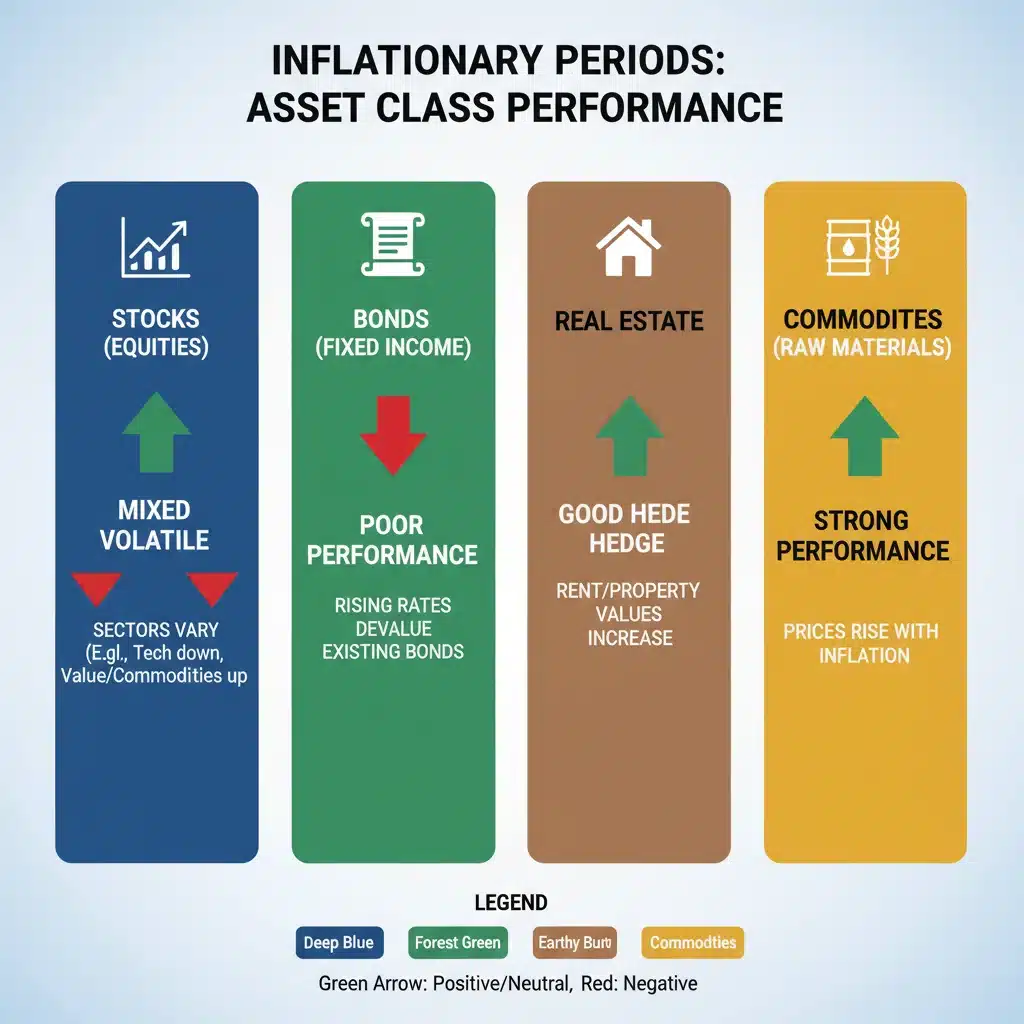
The average 3.5% inflation rate over the last six months is not merely a headline figure; it translates into tangible effects on various asset classes within your inflation investment portfolio. Historically, inflation tends to erode the real returns of fixed-income investments like bonds. When inflation rises, the fixed interest payments from bonds become less valuable in real terms, and their market value can decline, especially for long-duration bonds. This necessitates a careful re-evaluation of your bond holdings and potentially exploring inflation-indexed bonds (TIPs) that offer some protection against rising prices.
Equities, or stocks, present a more nuanced picture. Companies with strong pricing power, meaning they can pass on increased costs to consumers without significantly impacting demand, tend to perform better during inflationary periods. These often include companies in essential sectors or those with strong brand loyalty. However, companies with high operating leverage or those heavily reliant on borrowed capital can suffer as input costs rise and interest rates increase. Growth stocks, which derive a significant portion of their value from future earnings, can also be vulnerable as higher discount rates (due to rising interest rates) reduce the present value of those future earnings. Therefore, a selective approach to stock picking, focusing on quality companies with robust balance sheets and competitive advantages, is paramount for your inflation investment portfolio.
Anúncios
Real estate and commodities have traditionally been viewed as inflation hedges. Real estate, particularly income-generating properties, can see rents increase with inflation, providing a natural hedge. However, rising interest rates can also increase mortgage costs and cool housing demand. Commodities like gold, oil, and agricultural products often perform well during inflationary periods as their prices tend to rise with general price levels. Gold, in particular, is often seen as a safe haven asset during economic uncertainty and inflationary pressures. Diversifying into these asset classes can offer a degree of protection for your inflation investment portfolio, but it’s important to understand the cyclical nature and volatility associated with commodities.
Strategic Adjustments for Your Inflation Investment Portfolio
Given the persistent inflationary environment, proactive adjustments to your inflation investment portfolio are crucial for long-term success. One key strategy involves increasing your exposure to assets that historically perform well during inflationary periods. This includes, as mentioned, commodities. Beyond traditional precious metals, consider broad-based commodity exchange-traded funds (ETFs) or individual commodity futures, though the latter involves higher risk and requires specialized knowledge. Energy stocks, particularly those of integrated oil and gas companies, can also offer a hedge, as their revenues often rise with commodity prices.
In the realm of equities, focus on companies with strong balance sheets, high-profit margins, and established pricing power. These are typically businesses that produce essential goods or services, have strong brand recognition, or operate in oligopolistic markets. Value stocks, which are often trading below their intrinsic value, might also offer more resilience than high-growth stocks in a rising interest rate environment. Dividend-paying stocks from financially sound companies can also provide a steady income stream that can help offset some of the effects of inflation on your purchasing power. Re-evaluating your sector allocations to favor industrials, materials, and consumer staples over technology or discretionary consumer goods might be a prudent move for your inflation investment portfolio.
For fixed-income components, consider short-duration bonds or Treasury Inflation-Protected Securities (TIPS). Short-duration bonds are less sensitive to interest rate changes than long-duration bonds, making them more resilient in a rising rate environment. TIPS, as their name suggests, are designed to protect investors from inflation by adjusting their principal value based on changes in the Consumer Price Index (CPI). While their yields might be lower than conventional bonds, the inflation protection they offer can be invaluable. Exploring alternative investments such as real estate investment trusts (REITs) or private equity, which can offer diversification and potentially higher returns, might also be beneficial for your inflation investment portfolio, though these often come with higher liquidity risks.
Diversification and Risk Management in an Inflationary Climate
Diversification remains the cornerstone of any sound inflation investment portfolio, and its importance is amplified during periods of high inflation and economic uncertainty. Spreading your investments across various asset classes, industries, and geographies helps mitigate risk and can smooth out returns. While some assets may underperform during inflation, others may thrive, balancing the overall performance of your portfolio. This isn’t just about different types of stocks and bonds; it extends to alternative assets, international markets, and even different investment styles.
Risk management also takes on new dimensions. Inflation can increase market volatility, making it crucial to reassess your risk tolerance and adjust your portfolio accordingly. This might involve reducing exposure to highly speculative assets or those with significant leverage. Consider incorporating a ‘barbell strategy,’ where you hold a mix of very safe, liquid assets and a smaller portion of high-growth, potentially inflation-beating assets, while minimizing exposure to the middle ground. Regular rebalancing of your inflation investment portfolio is also essential to ensure it remains aligned with your long-term goals and current market conditions. As asset prices shift due to inflation, your original asset allocation can drift, necessitating adjustments to bring it back to your desired risk profile.
Furthermore, consider the impact of inflation on your savings. Keeping a significant portion of your emergency fund in a low-interest savings account means its purchasing power is constantly being eroded. While liquidity is important, explore options for high-yield savings accounts or short-term certificates of deposit (CDs) that offer slightly better returns, without sacrificing too much liquidity. The goal is to minimize the negative impact of inflation across all aspects of your financial life, not just your investment portfolio. Understanding and actively managing these risks will be critical to preserving and growing your wealth in the coming years, especially for your carefully constructed inflation investment portfolio.
The Role of Monetary Policy and Future Outlook for 2026
The trajectory of inflation and its impact on your inflation investment portfolio will be heavily influenced by the actions of central banks, particularly the Federal Reserve. Their primary mandate is price stability, and they have been aggressively raising interest rates to combat inflation. The effectiveness and timing of these policies will determine how quickly inflation moderates and what the economic landscape looks like in 2026. If central banks succeed in bringing inflation down without triggering a severe recession, we might see a ‘soft landing,’ where economic growth slows but avoids a sharp downturn. This scenario would generally be more favorable for a diversified inflation investment portfolio.
However, there’s always the risk of an ‘overtightening’ of monetary policy, leading to a deeper recession. In such a scenario, corporate earnings could decline significantly, impacting stock prices, and unemployment could rise. Conversely, if inflation proves more persistent than anticipated, central banks might be forced to maintain higher interest rates for longer, continuing to put pressure on growth-oriented assets. Monitoring central bank communications, economic data releases (such as CPI, PCE, and employment reports), and global economic indicators will be crucial for anticipating shifts in monetary policy and adjusting your inflation investment portfolio accordingly.
Looking ahead to 2026, most economists anticipate that inflation will have moderated from its recent peaks, but it may settle at a slightly higher level than the pre-pandemic average of around 2%. This ‘new normal’ of moderately higher inflation would still require investors to remain vigilant and maintain strategies designed to protect against its erosive effects. The global economic environment, including geopolitical stability, supply chain resilience, and technological advancements, will also play a significant role in shaping inflationary pressures. Therefore, a flexible and adaptable approach to your inflation investment portfolio, capable of responding to evolving economic conditions, will be your greatest asset.

Long-Term Investment Strategies Amidst Inflation
While short-term tactical adjustments are necessary, a robust long-term investment strategy is paramount for navigating sustained inflation and building lasting wealth. For your inflation investment portfolio, this means focusing on fundamental principles that transcend market cycles. Investing in high-quality companies with strong competitive advantages, durable earnings, and the ability to generate free cash flow remains a timeless strategy. These companies are better positioned to weather economic storms, pass on costs, and continue growing their intrinsic value over time, irrespective of inflationary pressures.
Furthermore, consider the power of compounding. Reinvesting dividends and capital gains, even during inflationary periods, allows your wealth to grow exponentially over the long run. While inflation erodes purchasing power, the compounding effect can often outpace it, especially if your investments are generating real returns. Patience and discipline are key; avoiding emotional decisions based on short-term market fluctuations is crucial. A well-diversified inflation investment portfolio, regularly reviewed and rebalanced, allows you to ride out volatility and capitalize on long-term growth trends.
Finally, continuous learning and adapting are essential. The global economy is dynamic, and what worked in the past may not be effective in the future. Staying informed about economic trends, market developments, and new investment vehicles will enable you to make timely and informed decisions for your inflation investment portfolio. Engage with financial advisors, read reputable financial publications, and critically evaluate information. Education is your best defense against market uncertainty and your most powerful tool for achieving your financial goals in an ever-changing inflationary landscape. The journey of managing an inflation investment portfolio is continuous, requiring vigilance, adaptability, and a commitment to sound financial principles.
Conclusion: Building a Resilient Inflation Investment Portfolio for 2026 and Beyond
The recent inflation trends, averaging 3.5% over the last six months, present both challenges and opportunities for investors as we look towards 2026. The impact on your inflation investment portfolio is undeniable, affecting everything from the real returns on your bonds to the profitability of your equity holdings. However, by understanding the drivers of inflation, strategically adjusting your asset allocation, and implementing robust risk management techniques, you can not only mitigate the negative effects but also position your portfolio for growth.
Key strategies include favoring assets that perform well during inflation, such as certain commodities and equities of companies with strong pricing power, while re-evaluating fixed-income exposure. Diversification across various asset classes and geographies remains paramount, as does a disciplined approach to rebalancing. Monitoring central bank policies and global economic indicators will provide crucial insights into the future trajectory of inflation and the broader economic environment.
Ultimately, building a resilient inflation investment portfolio for 2026 and beyond requires a combination of informed decision-making, strategic foresight, and unwavering discipline. By staying proactive, continuously educating yourself, and adapting your strategies to the evolving economic landscape, you can safeguard your wealth and achieve your long-term financial aspirations, even in the face of persistent inflationary pressures. The future of your investments hinges on your ability to navigate these complex economic currents with intelligence and adaptability.