Expert Insights: Mitigating Investment Risks in Volatile 2026 Markets with Diversification Strategies
Anúncios
The year 2026 is shaping up to be a period characterized by significant market volatility, presenting both formidable challenges and unique opportunities for investors. In such an environment, the bedrock of successful financial planning lies in effective investment risk mitigation. As global economies grapple with evolving geopolitical landscapes, technological disruptions, inflationary pressures, and shifting consumer behaviors, understanding and implementing robust strategies to protect and grow capital becomes paramount. This comprehensive guide delves into expert insights and actionable diversification strategies designed to navigate the complexities of volatile markets, ensuring your portfolio remains resilient and poised for growth.
Volatility, while often perceived as a negative, is an inherent characteristic of financial markets. It refers to the degree of variation of a trading price series over time. High volatility means that the price of an asset can change dramatically over a short time period, in either direction. For the savvy investor, volatility isn’t just about risk; it’s also about opportunity. The ability to identify undervalued assets during downturns or capitalize on rapid upturns requires a disciplined approach to investment risk mitigation and a well-thought-out strategy.
Anúncios
Understanding the 2026 Market Landscape: A Volatility Snapshot
Before diving into specific strategies, it’s crucial to first understand the forces that are likely to shape market volatility in 2026. Several key factors are expected to contribute to an unpredictable investment climate:
Geopolitical Tensions and Trade Wars
The ongoing geopolitical landscape, marked by potential trade disputes, regional conflicts, and shifting alliances, can significantly impact global supply chains, commodity prices, and investor sentiment. Such events often lead to sudden market swings as investors react to perceived threats and opportunities. Diversification across different geographical regions and asset classes can help cushion the impact of localized geopolitical shocks, forming a critical component of investment risk mitigation.
Inflationary Pressures and Interest Rate Hikes
Central banks worldwide are continually recalibrating monetary policies to combat inflation while supporting economic growth. The delicate balance between these objectives can lead to unexpected interest rate adjustments, which, in turn, affect borrowing costs, corporate earnings, and asset valuations. Investors need to consider assets that perform well in inflationary environments, such as real estate or inflation-protected securities, as part of their investment risk mitigation strategy.
Technological Disruption and Innovation Cycles
Rapid advancements in artificial intelligence, biotechnology, renewable energy, and other emerging technologies present both immense growth potential and disruptive risks. Companies that fail to adapt may see their market share erode, while innovative firms could experience exponential growth. Staying abreast of technological trends and investing in a diversified portfolio of companies across various sectors can help mitigate the risks associated with rapid technological shifts.
Supply Chain Fragilities and Commodity Price Swings
The vulnerabilities exposed in global supply chains in recent years are likely to persist, leading to potential shortages and price volatility in key commodities. This can impact manufacturing costs, consumer prices, and ultimately, corporate profitability. Diversifying into commodity-linked investments or companies with robust, localized supply chains can be a prudent aspect of investment risk mitigation.
Anúncios
Climate Change and ESG Factors
Increasing awareness and regulatory focus on climate change and Environmental, Social, and Governance (ESG) factors are reshaping investment landscapes. Companies with strong ESG credentials may attract more capital, while those with poor records could face regulatory hurdles, reputational damage, and financial penalties. Integrating ESG considerations into investment decisions is becoming an increasingly important facet of modern investment risk mitigation.
The Cornerstone of Resilience: Diversification Strategies
Diversification is not merely about spreading your investments across different assets; it’s a sophisticated strategy that involves understanding correlations, risk profiles, and long-term objectives. For effective investment risk mitigation in 2026, a multi-faceted approach to diversification is essential.
1. Asset Class Diversification
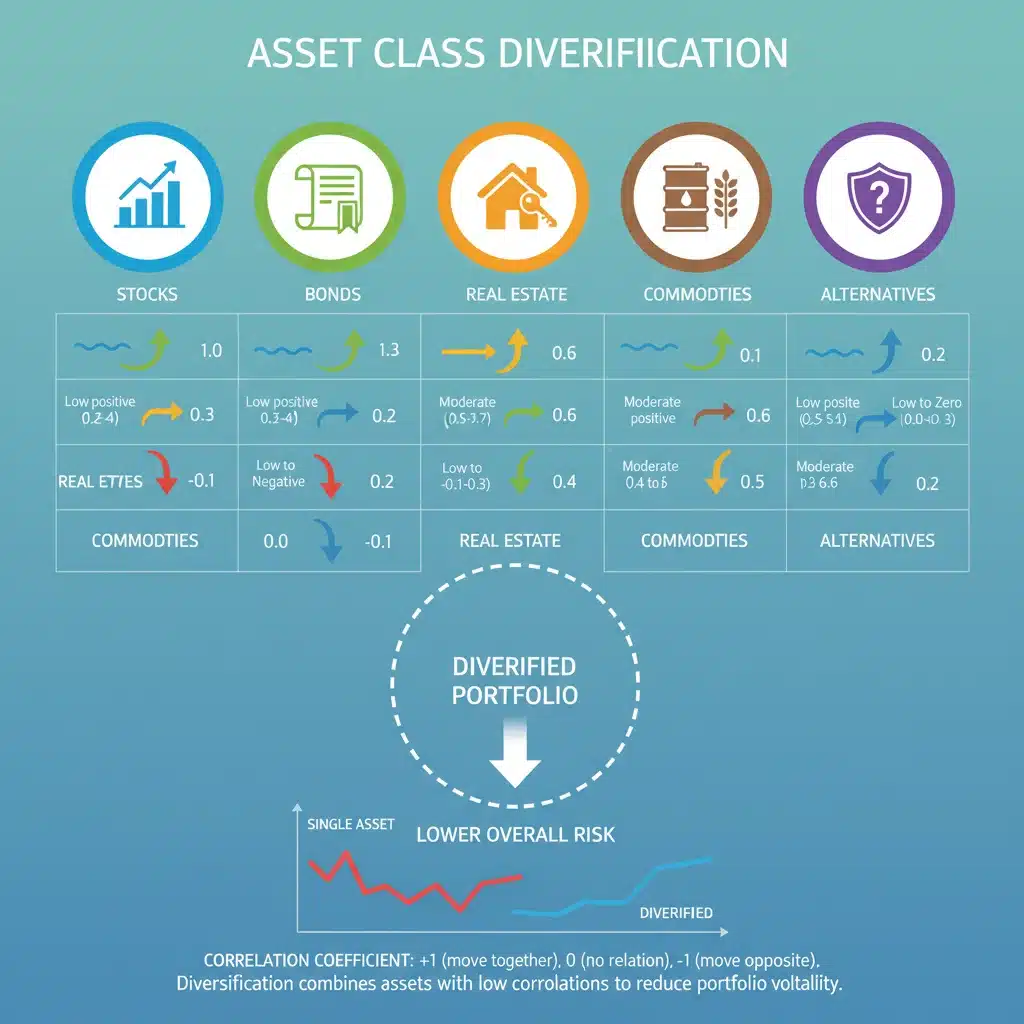
The most fundamental form of diversification involves allocating investments across various asset classes, such as stocks, bonds, real estate, and cash equivalents. Each asset class reacts differently to market conditions. For example, bonds often perform well when stocks are declining, providing a cushion for your portfolio. A balanced portfolio that includes a mix of these assets can significantly reduce overall volatility and enhance long-term returns. Consider:
- Equities (Stocks): Offer growth potential but come with higher volatility. Diversify across sectors, geographies, and market capitalizations (large-cap, mid-cap, small-cap).
- Fixed Income (Bonds): Provide stability and income, often acting as a hedge against equity market downturns. Diversify by issuer (government, corporate), maturity (short-term, long-term), and credit quality.
- Real Estate: Can offer inflation protection and steady income through rental properties or REITs (Real Estate Investment Trusts).
- Cash and Cash Equivalents: Essential for liquidity and as a safe haven during extreme market uncertainty.
2. Geographic Diversification
Investing solely in your home country exposes you to localized economic and political risks. Expanding your investment horizon to include international markets can provide significant diversification benefits. Different economies operate on different cycles, and a downturn in one region might be offset by growth in another. This global perspective is vital for comprehensive investment risk mitigation.
3. Sector and Industry Diversification
Within equities, it’s crucial to diversify across different sectors and industries. Over-reliance on a single sector, even a thriving one, can expose your portfolio to specific industry-wide risks. For instance, a technology downturn could severely impact a tech-heavy portfolio. Spreading investments across healthcare, consumer staples, industrials, energy, and other sectors helps to smooth out returns.
4. Diversification by Investment Style
Consider diversifying by investment style, such as growth stocks versus value stocks. Growth stocks are typically companies expected to grow earnings at an above-average rate, while value stocks are often mature companies trading below their intrinsic value. These styles can perform differently depending on market cycles, offering another layer of investment risk mitigation.
5. Alternative Investments
As traditional asset classes face increasing volatility, alternative investments are gaining prominence. These can include:
- Hedge Funds: Employ various strategies to generate returns, often with lower correlation to traditional markets.
- Private Equity: Investing in non-public companies, offering potentially higher returns but with lower liquidity.
- Commodities: Gold, silver, oil, and agricultural products can act as inflation hedges and provide diversification.
- Cryptocurrencies: While highly volatile, a small allocation can provide exposure to a nascent asset class with potentially high growth, though extreme caution and thorough research are advised for investment risk mitigation in this space.
- Managed Futures: Strategies that trade futures contracts across various markets, often designed to profit from trends regardless of market direction.
These alternatives, while often less liquid and more complex, can significantly enhance portfolio diversification and offer uncorrelated returns, which is crucial for advanced investment risk mitigation.
Advanced Strategies for Investment Risk Mitigation in 2026
Beyond traditional diversification, several advanced strategies can further bolster your portfolio against the anticipated volatility of 2026.
Dynamic Asset Allocation
Instead of a static asset allocation, dynamic asset allocation involves periodically adjusting your portfolio’s mix of assets in response to changing market conditions. This active approach allows you to overweight asset classes that are expected to perform well and underweight those facing headwinds. For instance, if economic indicators point to an impending recession, you might increase your allocation to bonds and defensive stocks, a proactive step in investment risk mitigation.
Hedging Strategies
Hedging involves using financial instruments to offset potential losses in your existing investments. This can include:
- Options and Futures: These derivatives can be used to protect against downside risk or to lock in future prices for commodities or currencies.
- Short Selling: While risky, short selling certain stocks or indices can profit from market downturns, thereby hedging long positions.
- Currency Hedging: For international investments, hedging against adverse currency fluctuations can preserve returns.
These strategies require a deep understanding of financial markets and are often best implemented with the guidance of a financial advisor, ensuring proper investment risk mitigation.
Dollar-Cost Averaging (DCA)
Dollar-cost averaging is a simple yet powerful strategy for volatile markets. It involves investing a fixed amount of money at regular intervals, regardless of the asset’s price. When prices are high, your fixed amount buys fewer shares; when prices are low, it buys more. Over time, this averages out your purchase price, reducing the impact of short-term price fluctuations and mitigating the risk of investing a lump sum at an unfavorable market peak.
Rebalancing Your Portfolio
Regularly rebalancing your portfolio ensures that your asset allocation remains consistent with your risk tolerance and financial goals. If one asset class performs exceptionally well, it might grow to represent a larger portion of your portfolio than initially intended, increasing your risk exposure. Rebalancing involves selling some of the outperforming assets and using the proceeds to buy underperforming ones, bringing your portfolio back to its target allocation. This systematic approach is a key element of ongoing investment risk mitigation.
Focus on Quality and Fundamentals
In volatile markets, the temptation to chase speculative assets can be strong. However, a prudent strategy emphasizes investing in high-quality companies with strong fundamentals, solid balance sheets, consistent earnings, and competitive advantages. These companies are generally more resilient during economic downturns and market corrections. Thorough due diligence and fundamental analysis are critical for identifying such opportunities and are integral to effective investment risk mitigation.
Maintain Adequate Liquidity
Ensure you have sufficient cash or highly liquid assets to cover unexpected expenses or to take advantage of investment opportunities that arise during market downturns. Being forced to sell investments at a loss to meet short-term financial needs can be detrimental to your long-term financial health. A robust emergency fund is a non-negotiable component of personal financial planning and indirect investment risk mitigation.
The Role of Behavioral Finance in Investment Risk Mitigation
Even the most sophisticated strategies can be undermined by emotional decision-making. Behavioral biases often lead investors to make irrational choices, particularly during periods of high volatility. Understanding and counteracting these biases is crucial for effective investment risk mitigation.
Fear and Greed
These two powerful emotions often drive market bubbles and crashes. Fear can lead investors to sell during market downturns, locking in losses, while greed can encourage excessive risk-taking during bull markets. A disciplined approach, sticking to your predetermined investment plan, and avoiding impulsive decisions are key.
Confirmation Bias
This bias involves seeking out information that confirms existing beliefs while ignoring contradictory evidence. In investing, it can lead to tunnel vision, preventing you from seeing potential risks or opportunities. Actively seeking diverse perspectives and challenging your own assumptions can help mitigate this bias.
Herding Mentality
The tendency to follow the actions of a larger group, often without independent critical analysis, can lead to widespread market irrationality. Resisting the urge to follow the crowd, especially during speculative frenzies or panic selling, is vital for sound investment risk mitigation.
Loss Aversion
The psychological phenomenon where the pain of losing is felt more intensely than the pleasure of gaining an equivalent amount. This can lead to holding onto losing investments for too long, hoping they will recover, or selling winning investments too early to lock in small gains. A rational, objective approach to portfolio management helps overcome loss aversion.
Developing a robust investment philosophy and adhering to it, even when emotions run high, is a critical, often overlooked, aspect of investment risk mitigation. A financial advisor can provide an objective perspective and help you stay on track.

Leveraging Professional Guidance for Investment Risk Mitigation
Navigating the complexities of volatile markets, especially in a year like 2026, can be challenging for even experienced investors. Professional financial advisors bring expertise, objectivity, and access to advanced tools and research that can significantly enhance your investment risk mitigation efforts.
Personalized Financial Planning
A good advisor will work with you to understand your unique financial situation, risk tolerance, time horizon, and specific goals. They can then develop a personalized investment plan tailored to your needs, which is the foundation of effective investment risk mitigation.
Expert Market Analysis
Financial advisors have access to in-depth market research and analytical tools that can help identify emerging trends, assess risks, and spot opportunities that individual investors might miss. Their expertise in interpreting complex market data is invaluable.
Discipline and Emotional Control
As discussed, behavioral biases can derail investment plans. An advisor acts as a behavioral coach, helping you stick to your strategy during periods of market stress and preventing impulsive decisions driven by fear or greed. They provide the necessary discipline for consistent investment risk mitigation.
Access to Broader Investment Opportunities
Advisors often have access to a wider range of investment products and strategies, including alternative investments, that may not be readily available to individual investors. This expanded access can further enhance diversification and potential returns.
Tax-Efficient Strategies
Effective tax planning is an integral part of maximizing investment returns. Advisors can help implement tax-efficient investment strategies, such as tax-loss harvesting or utilizing tax-advantaged accounts, which indirectly contribute to overall financial health and investment risk mitigation.
Conclusion: Building a Resilient Portfolio for 2026 and Beyond
The year 2026 promises a dynamic and potentially volatile investment landscape. However, with a strategic and disciplined approach to investment risk mitigation, investors can not only protect their capital but also position themselves for significant growth. The core principles remain steadfast: thorough diversification across asset classes, geographies, and investment styles; a willingness to explore alternative investments; and the implementation of advanced strategies like dynamic asset allocation and hedging.
Furthermore, understanding and countering behavioral biases, coupled with the potential benefits of professional financial guidance, are crucial for navigating turbulent markets successfully. By focusing on quality, maintaining liquidity, and regularly rebalancing your portfolio, you can build a resilient investment framework that is well-equipped to withstand market storms and capitalize on emerging opportunities.
Remember, investing is a marathon, not a sprint. Short-term market fluctuations are inevitable. A well-constructed, diversified portfolio, managed with a long-term perspective and a proactive stance on investment risk mitigation, is your best defense and offense in the ever-evolving world of finance. Start planning today to secure your financial future in 2026 and the years to come.