Top US Community Colleges for Transferring in 2026: Save on Your Bachelor’s

Anúncios
In an increasingly competitive and costly higher education landscape, many students are seeking smart, strategic pathways to achieve their academic and career goals without accumulating crippling debt. One of the most effective and often overlooked routes is starting at a community college and then transferring to a four-year university. This approach, particularly for those aiming for a 2026 transfer, can yield substantial financial benefits, potentially saving students up to 40% on their bachelor’s degree.
This comprehensive guide will delve into the best US community colleges for transferring in 2026, offering insights into what makes them exceptional, how to navigate the transfer process seamlessly, and strategies to maximize your savings. We will explore key factors to consider when choosing a community college, highlight institutions with strong transfer agreements, and provide actionable advice to ensure a smooth transition to your dream university. If you’re looking to make an informed decision about your higher education journey and save a significant amount of money, understanding the power of a strategic Community College Transfer is paramount.
Anúncios
The Financial Advantage of a Community College Transfer
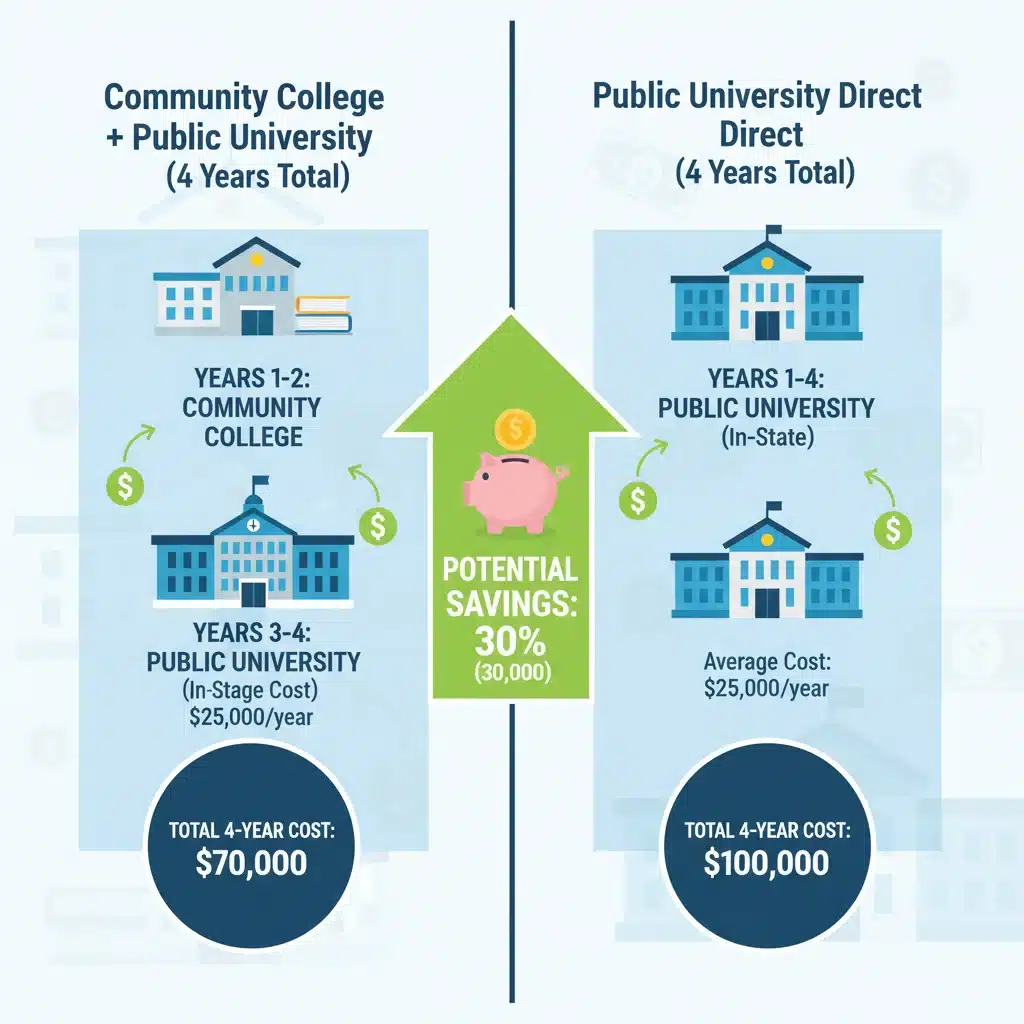
Let’s face it: the cost of a four-year university education can be daunting. Tuition fees, room and board, books, and living expenses add up quickly, leaving many students and their families with significant financial burdens. This is where the Community College Transfer strategy shines. By completing your first two years at a community college, you can dramatically reduce the overall cost of your bachelor’s degree.
On average, community college tuition is significantly lower than that of a four-year university, whether public or private. For instance, the average annual tuition and fees for a public two-year institution were approximately $3,770 for the 2023-2024 academic year, compared to about $11,260 for in-state tuition at a public four-year university and over $41,540 for a private four-year university. Over two years, this difference can translate into savings of tens of thousands of dollars. When you factor in the potential for living at home during your community college years, the savings become even more substantial.
Beyond direct tuition costs, community colleges often offer more affordable access to textbooks, transportation, and other student services. This initial financial relief allows students to focus more on their studies and less on mounting debt, setting a stronger foundation for their academic career. The money saved through a Community College Transfer can be reinvested into future education, used to fund study abroad programs, or simply reduce the need for student loans, leading to a more financially secure future post-graduation.
Key Factors for Choosing the Best Community College for Transfer
Selecting the right community college for your transfer journey is a crucial step. It’s not just about affordability; it’s about ensuring a smooth academic transition and maximizing your chances of acceptance into your desired four-year institution. Here are the key factors to consider:
1. Robust Transfer Agreements and Pathways
The most important factor is the presence of strong, formalized transfer agreements with four-year universities. These agreements, often called ‘2+2 programs’ or ‘articulation agreements,’ ensure that the credits you earn at the community college will seamlessly transfer and count towards your bachelor’s degree at the university. Look for colleges that have:
Anúncios
- Guaranteed Admission Programs: Some community colleges have agreements with specific universities that guarantee admission for students who meet certain academic criteria (e.g., GPA, specific courses completed).
- Program-Specific Agreements: Ensure that the courses you plan to take align with the requirements of your intended major at the transfer university.
- Statewide Transfer Systems: Many states have unified transfer systems (e.g., California’s IGETC, Florida’s 2+2 plan) that streamline the transfer process across public institutions.
2. Academic Quality and Support Services
While community colleges are known for affordability, academic quality should not be compromised. Look for institutions with:
- Accreditation: Ensure the community college is regionally accredited, as this is essential for credit transfer.
- Experienced Faculty: Many community college professors hold advanced degrees and have extensive real-world experience, offering excellent foundational instruction.
- Strong Transfer Advising: Dedicated transfer counselors who understand the requirements of various universities are invaluable. They can help you plan your coursework, navigate applications, and ensure you’re on the right track for a successful Community College Transfer.
- Student Support Services: Tutoring centers, writing labs, career services, and libraries are vital resources that can enhance your academic experience and prepare you for university-level work.
3. Location and Campus Environment
Consider the proximity of the community college to your home and the overall campus environment. While some students prefer to live at home to save money, others might seek a more traditional campus experience. A positive learning environment can significantly impact your academic success.
4. Program Offerings and Major Alignment
Ensure the community college offers programs and courses that directly align with your intended major at the four-year university. Taking irrelevant courses can lead to wasted time and money. Use online tools and academic advisors to map out your course plan carefully.
Top US Community Colleges for Transferring in 2026
While a definitive ‘best’ list can be subjective and depend on individual goals and target universities, certain community colleges consistently stand out for their robust transfer programs, academic excellence, and student support. Here are some highly regarded institutions known for their successful Community College Transfer rates and comprehensive transfer services:
1. Santa Monica College (Santa Monica, California)
SMC is renowned for its exceptional transfer rates to the University of California (UC) and California State University (CSU) systems. It boasts one of the highest transfer rates to UCLA and USC in the nation. SMC offers a wide array of transfer pathways, dedicated counseling, and a vibrant campus environment near the beach.
- Why it’s great for transfer: Strong articulation agreements, high transfer rates to top-tier universities, comprehensive transfer center, diverse academic programs.
- Considerations for 2026: Early planning for UC/CSU applications is crucial due to high demand.
2. Northern Virginia Community College (NOVA) (Northern Virginia)
As one of the largest community colleges in the US, NOVA serves a vast student population and has extensive guaranteed admission agreements with numerous public and private four-year institutions in Virginia, including George Mason University, Virginia Tech, and the University of Virginia. Its multiple campuses offer diverse program options.
- Why it’s great for transfer: Extensive guaranteed admission agreements, large course offerings, strong academic support, multiple campus locations.
- Considerations for 2026: Leverage their detailed transfer guides and advisors early.
3. Houston Community College (Houston, Texas)
HCC is a massive urban community college system with strong ties to major Texas universities like the University of Houston and Texas Southern University. It offers numerous associate degrees designed specifically for transfer, along with comprehensive student support services.
- Why it’s great for transfer: Affordable tuition, wide range of programs, strong connections with local universities, diverse student body.
- Considerations for 2026: Utilize their specific transfer guides for Texas university systems.
4. Maricopa Community Colleges (Phoenix, Arizona)
This district encompasses ten community colleges and two skill centers across Maricopa County. They have a robust transfer system with Arizona’s public universities (Arizona State University, University of Arizona, Northern Arizona University) through programs like the Arizona General Education Curriculum (AGEC). This makes the Community College Transfer process highly streamlined within the state.
- Why it’s great for transfer: Coordinated district-wide transfer system, clear pathways to Arizona’s public universities, diverse program offerings.
- Considerations for 2026: Understand the AGEC requirements thoroughly.
5. Miami Dade College (Miami, Florida)
MDC is one of the largest and most diverse colleges in the nation. It has an excellent reputation for its transfer programs, particularly within the Florida State University System, benefiting from Florida’s robust 2+2 articulation agreement. They offer strong academic advising and a wide range of associate degrees.
- Why it’s great for transfer: Strong 2+2 articulation with Florida universities, diverse student body, extensive academic programs, and support services.
- Considerations for 2026: Familiarize yourself with the Florida 2+2 plan early.
6. De Anza College (Cupertino, California)
Located in Silicon Valley, De Anza College is another California gem with exceptional transfer rates to the UC and CSU systems, particularly to UC Berkeley and UCLA. It offers rigorous academic programs and a strong focus on preparing students for competitive university admissions.
- Why it’s great for transfer: High transfer rates to top UCs, strong academic reputation, excellent counseling services.
- Considerations for 2026: Be prepared for a competitive academic environment.
7. College of Lake County (Grayslake, Illinois)
CLC serves students in northeastern Illinois and has strong transfer partnerships with universities across Illinois, including the University of Illinois system. They offer comprehensive transfer resources and advisors dedicated to helping students navigate the transition.
- Why it’s great for transfer: Good transfer agreements with Illinois universities, strong student support, diverse course offerings.
- Considerations for 2026: Explore their specific transfer guides for Illinois universities.
8. Community College of Philadelphia (Philadelphia, Pennsylvania)
CCP offers numerous transfer agreements with four-year colleges and universities throughout Pennsylvania and beyond, including Drexel University, Temple University, and the University of Pennsylvania. Its urban location provides access to various cultural and professional opportunities.
- Why it’s great for transfer: Many transfer agreements, urban location with access to opportunities, diverse programs.
- Considerations for 2026: Work closely with their transfer center to maximize agreement benefits.
Strategies for a Successful Community College Transfer in 2026
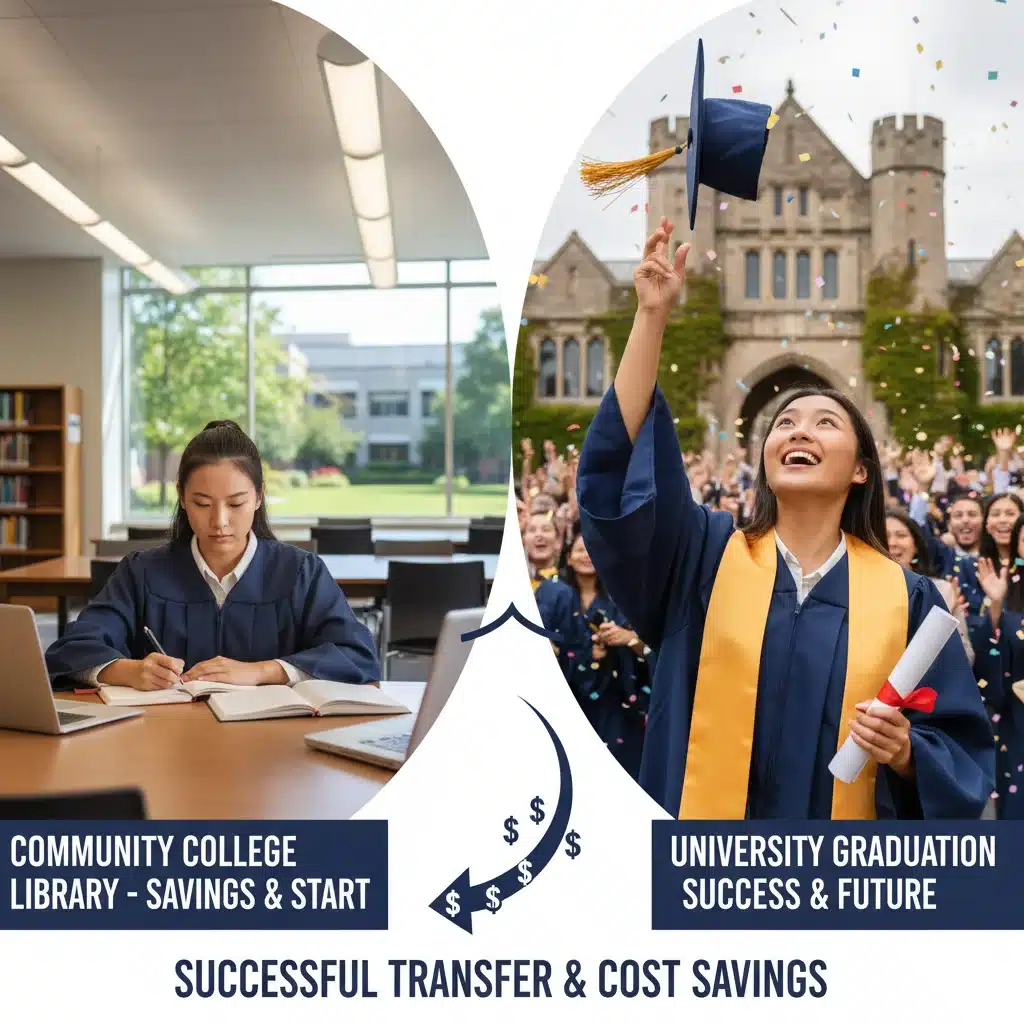
Simply attending a community college isn’t enough; strategic planning is key to a smooth and successful transfer. Here’s how to maximize your chances of success and ensure your Community College Transfer saves you money and time:
1. Plan Early and Research Thoroughly
As soon as you decide on a Community College Transfer, start researching your target four-year universities and their transfer requirements. Look at their websites, attend transfer information sessions, and ideally, speak with admissions counselors from both the community college and the university.
- Identify Target Universities and Majors: Know where you want to go and what you want to study before you even enroll in your first community college class.
- Review Transfer Guides: Most universities publish specific transfer guides for community college students. These are invaluable resources.
- Understand Prerequisite Courses: Ensure the courses you take at community college fulfill the prerequisite requirements for your intended major at the university.
2. Work Closely with Transfer Advisors
Your community college’s transfer advising office is your best friend. These advisors specialize in helping students navigate the transfer process. They can:
- Help with Course Selection: Ensure you’re taking the right courses that will transfer and fulfill degree requirements.
- Explain Articulation Agreements: Guide you through specific 2+2 programs or guaranteed admission pathways.
- Assist with Applications: Help you understand application deadlines, essay requirements, and other transfer application specifics.
3. Maintain a Strong GPA
Your academic performance at community college is paramount. Universities often have minimum GPA requirements for transfer students, and competitive programs may require a significantly higher GPA. Aim for a GPA of 3.0 or higher, and ideally above 3.5, to maximize your transfer options.
4. Get Involved in Extracurricular Activities
While academics are crucial, universities also look for well-rounded applicants. Participate in clubs, student government, volunteer work, or part-time jobs. These experiences demonstrate leadership, teamwork, and commitment, making your transfer application more compelling.
5. Build Relationships with Professors
Strong relationships with your community college professors can lead to valuable letters of recommendation, which are often required for university transfer applications. Attend office hours, participate in class, and show genuine interest in your studies.
6. Understand Financial Aid for Transfer Students
Don’t forget about financial aid when planning your Community College Transfer. While you save money on tuition, you’ll still need to apply for aid at your transfer university. Complete the FAFSA and any institutional aid applications well before deadlines. Be aware that some scholarships are specifically for transfer students.
Maximizing Your Savings: Beyond Tuition
Saving up to 40% on your bachelor’s degree isn’t just about lower tuition. There are other avenues to maximize your financial benefits through a Community College Transfer:
- Living at Home: If feasible, living at home during your community college years can eliminate room and board costs, which are often a significant portion of university expenses.
- Part-Time Work: The flexibility of community college schedules can allow students to work part-time, earning money to cover expenses and reduce the need for loans.
- Scholarships for Community College Students: Many community colleges offer their own scholarships, and there are also external scholarships specifically for community college students planning to transfer.
- Textbook Savings: Community colleges often have more affordable options for textbooks, including rental programs, open educational resources (OER), and robust library resources.
- Transportation Costs: Commuting to a local community college can be far less expensive than relocating for a university, especially when considering flights or long-distance travel.
Common Misconceptions About Community College Transfer
Despite its many benefits, the Community College Transfer path sometimes faces misconceptions. Let’s address a few:
- "Community college is for students who aren’t smart enough for university." This is simply untrue. Many high-achieving students choose community college for financial reasons, academic preparation, or to explore different majors. The academic rigor at top community colleges is often comparable to introductory university courses.
- "My credits won’t transfer." While this can be a concern if not planned properly, working with advisors and choosing colleges with strong articulation agreements largely mitigates this risk. The key is proactive planning.
- "I’ll miss out on the ‘university experience’." While the first two years might be different, a Community College Transfer student still gets two full years of the university experience. Many transfer students find they are more mature, focused, and appreciative of their university time. Plus, community colleges offer their own vibrant student life.
- "It will take longer to graduate." With proper planning and adherence to transfer agreements, a 2+2 pathway means you can still complete your bachelor’s degree in four years, just like a direct-entry student.
The 2026 Landscape: What to Expect
As you plan your Community College Transfer for 2026, it’s important to consider potential shifts in the higher education landscape:
- Increasing Emphasis on Affordability: Universities are increasingly recognizing the value of transfer students, especially as they face enrollment challenges and pressure to make education more accessible. This could lead to more robust transfer agreements and scholarships.
- Evolving Program Demands: Keep an eye on in-demand fields. Community colleges are often quick to adapt their vocational and transfer programs to meet current workforce needs, which can be an advantage.
- Online Learning Options: The growth of online and hybrid learning at community colleges offers greater flexibility, especially for students balancing work or family commitments. Ensure that online courses will transfer effectively to your target university.
- FAFSA Changes: Be aware of any ongoing FAFSA changes, as these can impact financial aid eligibility for both community college and university years. Stay updated through official government and college financial aid websites.
Making Your Decision: A Step-by-Step Approach
To ensure a successful Community College Transfer for 2026, follow these steps:
- Define Your Goals: What major do you want to pursue? Which universities are your top choices?
- Research Community Colleges: Look for institutions with strong transfer agreements to your target universities.
- Visit Campuses (Virtually or In-Person): Get a feel for the environment and student support services.
- Meet with Advisors: Speak with transfer advisors at both the community college and your prospective university.
- Create a Course Plan: Map out your community college courses to ensure they meet transfer requirements.
- Apply for Admission and Financial Aid: Don’t miss deadlines for either the community college or, later, the university.
- Focus on Academics: Maintain a strong GPA and engage in your studies.
- Stay Connected: Keep in touch with your transfer advisor and the admissions office of your target university.
Conclusion: Your Path to an Affordable Bachelor’s Degree
The path to a bachelor’s degree doesn’t have to be paved with overwhelming debt. By strategically opting for a Community College Transfer, you can access quality education, build a strong academic foundation, and save a significant amount of money – potentially up to 40% – on your overall degree cost. The best US community colleges for transferring in 2026 offer robust programs, excellent support services, and clear pathways to four-year universities.
Remember, success lies in proactive planning, diligent research, and effective utilization of available resources. Embrace the community college advantage, and you’ll not only achieve your academic dreams but also set yourself up for a more financially stable future. Start your research today, connect with advisors, and pave your way to a seamless and affordable university experience.